
"No pilgrim ever returns home without having one less prejudice and one more new idea."
Mit dieser treffenden Bemerkung des englischen Humanisten Thomas Morus möchte ich dich zunächst auf eine kleine gedankliche Pilgerreise ins Mittelalter, anschließend in die Pastorenhäuser von St. Jakobi und zum Schluss in ein ganz besonderes Café mitnehmen: das Café Camino, benannt nach dem Camino de Santiago, dem Jakobsweg. Alles ist mit allem verbunden. Du wirst sehen!
“In God’s name we fare…”
The 14th-century pilgrim song "In gotes namen fara wir" (In God's name we journey) comments on the individual stages and dangers of the Way of St. James. Lübeck lay at the intersection of three pilgrimage routes: the Via Baltica, the Via Scandinavica, and the Via Jutlandica. Here, people found respite for a short time—for a prayer service in St. Jakobi Church, a rest at the Holy Spirit Hospital, or a good meal at the pilgrim hostel. Between the 11th and 14th centuries, millions of people traveled in pilgrim's garb, wearing pilgrim badges on their coats or hats. They journeyed on foot, by donkey, carriage, horse, or water, drawn to holy and ancient sites.
They walked in the footsteps of Christ, seeking healers, giving thanks for cures, asking for blessings on their endeavors, doing penance, and ultimately seeking eternal salvation. Pilgrimages were dangerous and expensive. Along the way, they faced peril from wild animals, robberies, swindlers, and disease.
Proxy pilgrimages were therefore commonplace: those who could afford it sent a "pilgrim brother" or "pilgrim sister" to the holy sites to pray for the soul of the person who sent them. This posed a relatively low personal risk for those who stayed home. The pilgrims brought their ideas, traditions, and beliefs with them to the towns along the way. For this reason, Lübeck was also a cosmopolitan place where cultural influences mingled. Furthermore, the faithful not only provided a good income for the shoemakers who had to repair the worn-out shoes.
Pilgrimage traces in Lübeck
Traces of this era can still be discovered in Lübeck today. Many Lübeck citizens visited pilgrimage sites in Germany, as well as in Riga, Einsiedeln, Tours, and Santiago de Compostela. Numerous pilgrim badges have been found, bearing witness to this. St. James' Church has always held a central place in these events and remains open to pilgrims to this day. Inside the church, observant visitors will find St. James with his pilgrim's staff and scallop shells embedded in the sandstone – the pilgrim badge from Santiago de Compostela. Right next door are the pilgrim hostel and the four St. James' Church houses, which once housed organists, choirmasters, widows of church officials, and pallbearers.
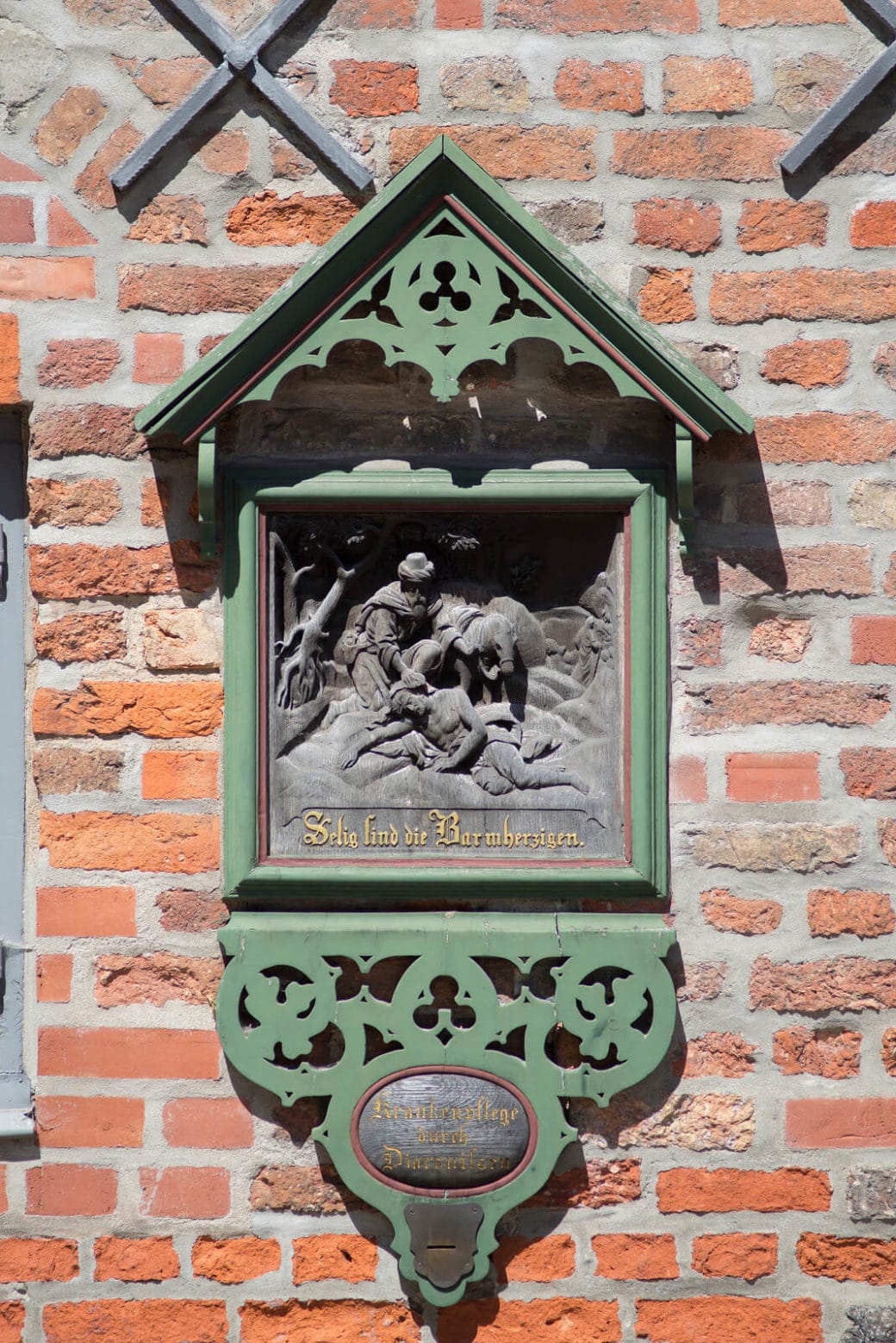
In Lübeck, you can also hike the pilgrimage route of the merchant Heinrich Constin. It is one of the oldest Stations of the Cross in Germany, a path with seven stations, which Constin established after his pilgrimage to the Holy Land, which he embarked on in 1468. The 1,650-meter-long path, named after him, begins at a limestone relief at St. Jakobi Church and ends at a late Gothic brick house on Jerusalemsberg hill, not far from the Trave River.
Pastors' Houses St. Jakobi
During the 13th century, the first two parsonages were built next to a recently constructed Latin school. In 1601/02, these were remodeled, and houses 3 and 4 were built in the Renaissance style. In 1866, the cesspool of the former school was surveyed. This school was primarily attended by the sons of captains and merchants. In the excavated cesspool, whose construction is documented in the city's oldest treasury book from 1338, archaeologists discovered, among other things, inkwells, wax tablets, counters, and board game pieces. The drawings of the medieval students were still clearly visible on the wax tablets, and the text on some of the tablets was still legible. Isn't that simply fascinating?
Café Camino
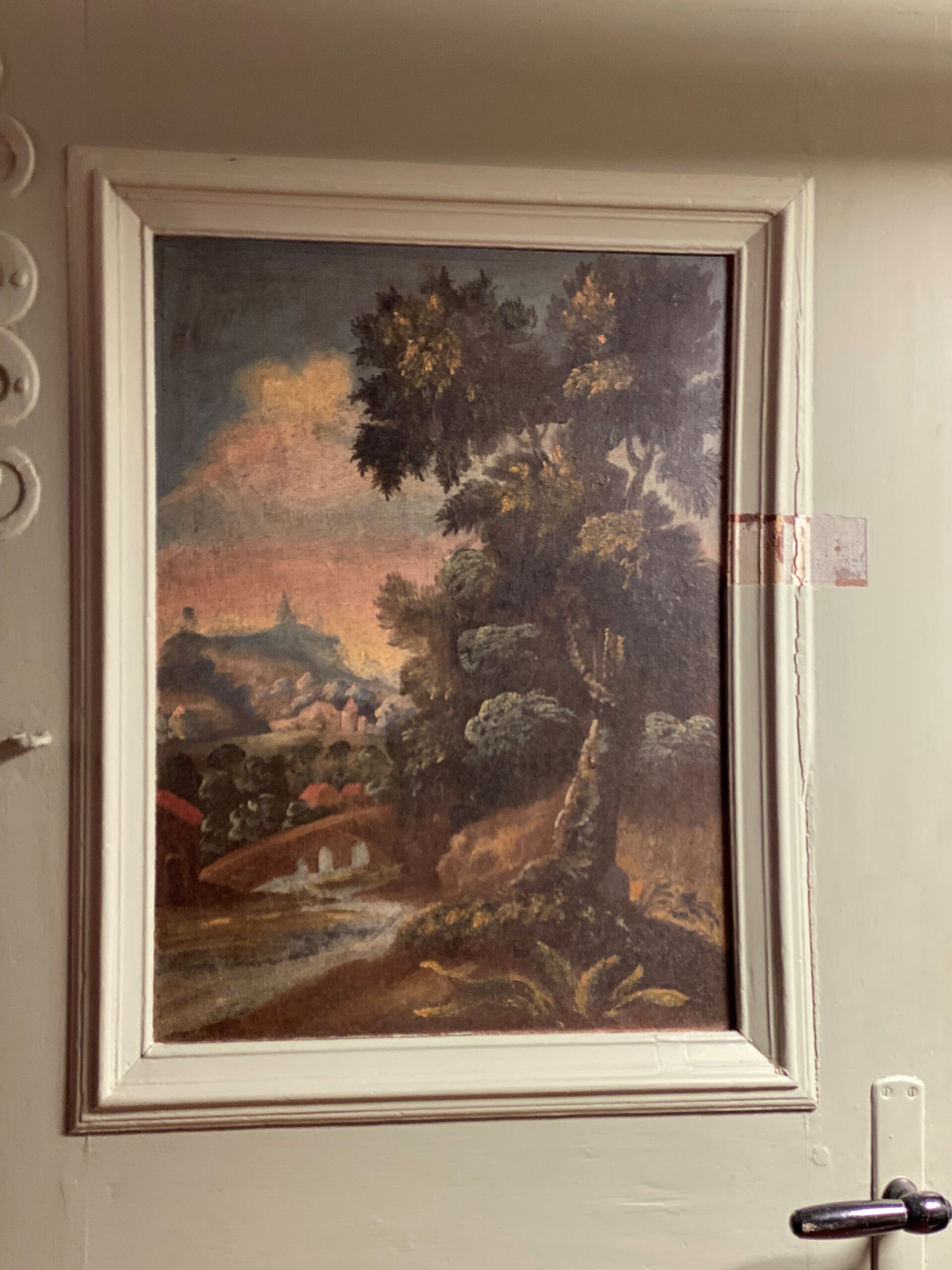
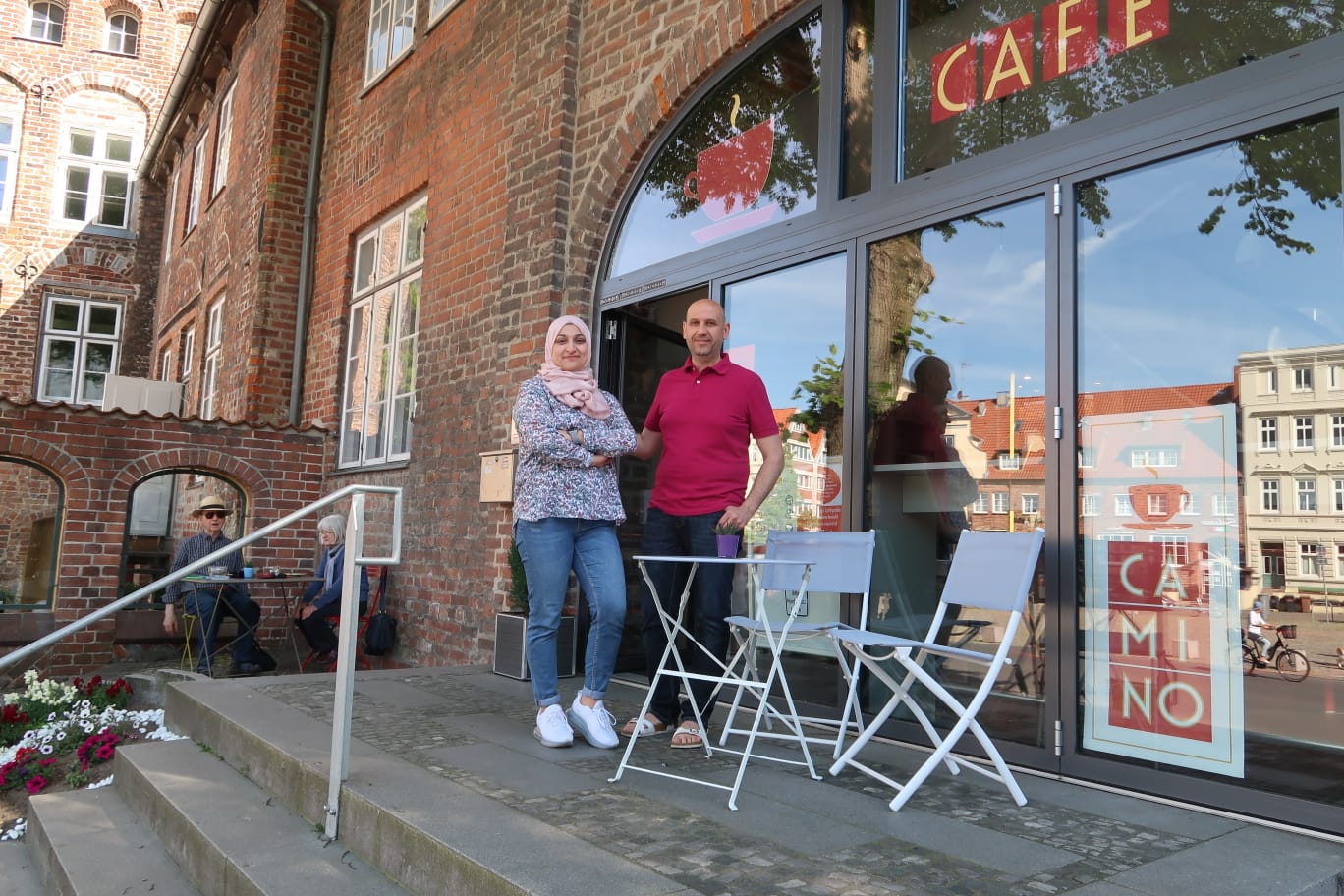
In diesen Pastorenhäusern ist ein bezauberndes Pilgercafé untergebracht: das Café Camino. Einmalig in Lübeck! Allein schon das historische Interieur ist einen Besuch wert. Die Diele mit der Decke, die eine Malerei aus dem 17. Jahrhundert ziert. Der für Lübeck typische hölzerne Kücheneinbau. Einfach perfekt, um den leckeren Mix aus deutscher, arabischer, spanischer und französischer Küche des „Café Camino“ zu genießen. Ayman Al Kassar und seine Frau Nada stammen ursprünglich aus Damaskus. Sie kamen mit ihren drei Töchtern im Dezember 2015 nach Lübeck, ihr kleiner Sohn kam in Deutschland zur Welt.

a true family business
The family has been running the café in the historic premises since 2019. Ayman and Nada are the heart and soul of this place. Their two older daughters also help with the service. Before long, we're chatting animatedly about… languages, what else? You know my passion is language learning. Syrian Arabic is closely related to Lebanese, Palestinian, and Jordanian dialects. Okay, okay, I'm digressing…

Nada is in charge of cooking and baking. It's easy to sense Nada's great passion as soon as you look into her bright eyes. She brought fantastic recipes with her from her Syrian homeland, and she's always trying out new things. All guests should feel equally welcome at the Al Kassar family's home. There's a comprehensive breakfast menu based on the stations of the Camino de Santiago (Way of St. James).
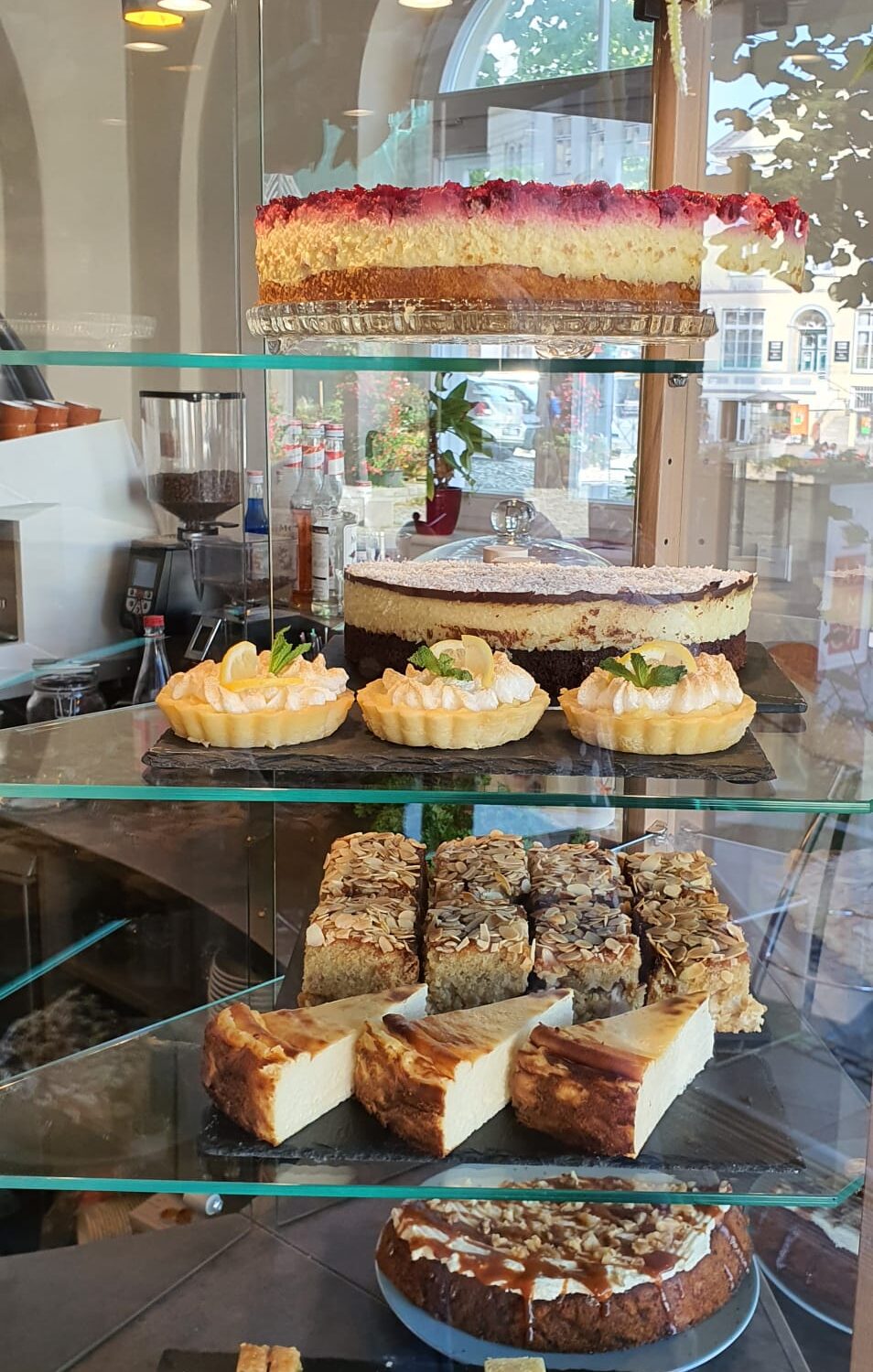
Darüber hinaus stehen herzhafte Speisen wie Manakish und Hummus auf dem Menu. Und natürlich auch Kuchen und Gebäck. Beliebte Zutaten für arabische Backwaren sind Honig, Mandeln, Pistazien, Datteln und Feigen. Ich empfehle, dazu eine Tasse Daffee – ein Heißgetränk aus Dattelsamen – zu bestellen. Meine Lieblingssorte ist der Daffee mit Zimt. Komplett koffeinfrei und dazu noch sehr gesund. Übrigens steckt hinter dem Daffee eine weitere faszinierende Geschichte, die ich dir hier verlinke. Alles ist mit allem verbunden.
In keeping with the spirit of Thomas More's ideas, I highly recommend a visit to Café Camino.
Shukran, dear Nada and Ayman!
Come join us in the Virtual Café Camino:

Thank you for this lovely glimpse into such a special place; as a Lübeck resident, I absolutely must try out the café!
Dear Annette, the café is really still a bit of a hidden gem in Lübeck.
Ein wirklich besonders schöner Ort in Lübeck: Das wunderbare syrische Frühstück, das besondere Ambiente, sowohl draußen mit Blick auf den Sommergarten und drinnen im Salon mit den Deckenmalereien – und nicht zuletzt die freundliche Atmosphäre…absolut empfehlenswert!