
Heute sind wir in der Engelsgrube in der Lübecker Altstadt für die Lübeck ZWISCHENZEILEN unterwegs, um Hamo Sadiq, den Geschäftsführer des Café Marae zu treffen. Bevor wir das Café betreten, schauen wir uns aber noch einmal in dieser „Grube“ um, die von Salzpackern, Arbeitern und Kisten- und Balkenträgern, aber auch von Reedern und Schiffern bewohnt wurde. Sie ist eine von vielen spannenden Altstadtstraßen, in der jedes Haus eine Geschichte erzählen kann. War die Engelsgrube doch immer schon eine der Lebensadern der Hansestadt, die zum quirligen Hafen führte, wo Koggen be- und entladen wurden, sich Fracht stapelte, Seeleute nach einer langen Nacht in den Armen einer schönen Frau zurück an Bord stolperten und erfolgreiche Reeder und Kaufleute im Anzug und mit Spazierstock in der Hand nach dem Rechten sahen
The “English pit”
Nein, nicht nach den Engeln ist diese Altstadtstraße benannt – wobei das wirklich schön wäre. Der Name geht auf den Englandhandel und die in der Hansezeit engen – nicht immer friedlichen – Beziehungen zu England zurück. In London am Nordufer der Themse betrieb die Hanse damals den Stalhof, der bis 1598 Bestand hatte. In den Mauern dieses Kontors wurde auch gewohnt und repräsentiert, weshalb es dort auch zu „Haarzausen und anderem Lärmen“ kam, wie es in zeitgenössischen Dokumenten detailreich beschrieben wird. Die deutschen Kaufleute boten feinstes russisches Pelzwerk, Wachs und Honig, Eisen aus Schweden, Stahl, Kupfer und Spezialhölzer. Der wichtigste Ausfuhrartikel hingegen war beste englische Schafwolle. Wenn du über die Hanse mehr wissen willst: Im nahegelegenen Europäischen Hansemuseum kannst du dich in ihre Geschichte vertiefen.
Beinahe jedes Haus in der Engelsgrube steht unter Denkmalschutz. In den Häusern 11-17 befindet sich der zur Schiffergesellschaft gehörige Schifferhof mit Freiwohnungen für Schiffer-Witwen. Die gesamte Anlage steht seit 1982 unter Denkmalschutz. Mehrere Wohngänge zweigen von der Engelsgrube ab, darunter der Bäcker Gang mit mehreren Renaissance-Buden, der Qualmannsgang mit mehreren traufenständigen Renaissance-Gebäuden und Sievers Torweg. Trau dich ruhig mal rein: die Wohngäng darfst du betreten und dich gern umschauen. Wenn du Glück hast, kommst du auch direkt mit jemandem ins Gespräch, der dort gerade die Stockrosen pflegt oder einen Kaffee genießt. Im Haus in de Engelsgrube 64 mit seinem beeindruckenden Treppengiebel ist die Heilsarmee ansässig. Und direkt gegenüber liegt die Nummer 59. Dort – im Café Marae – werden wir schon erwartet.
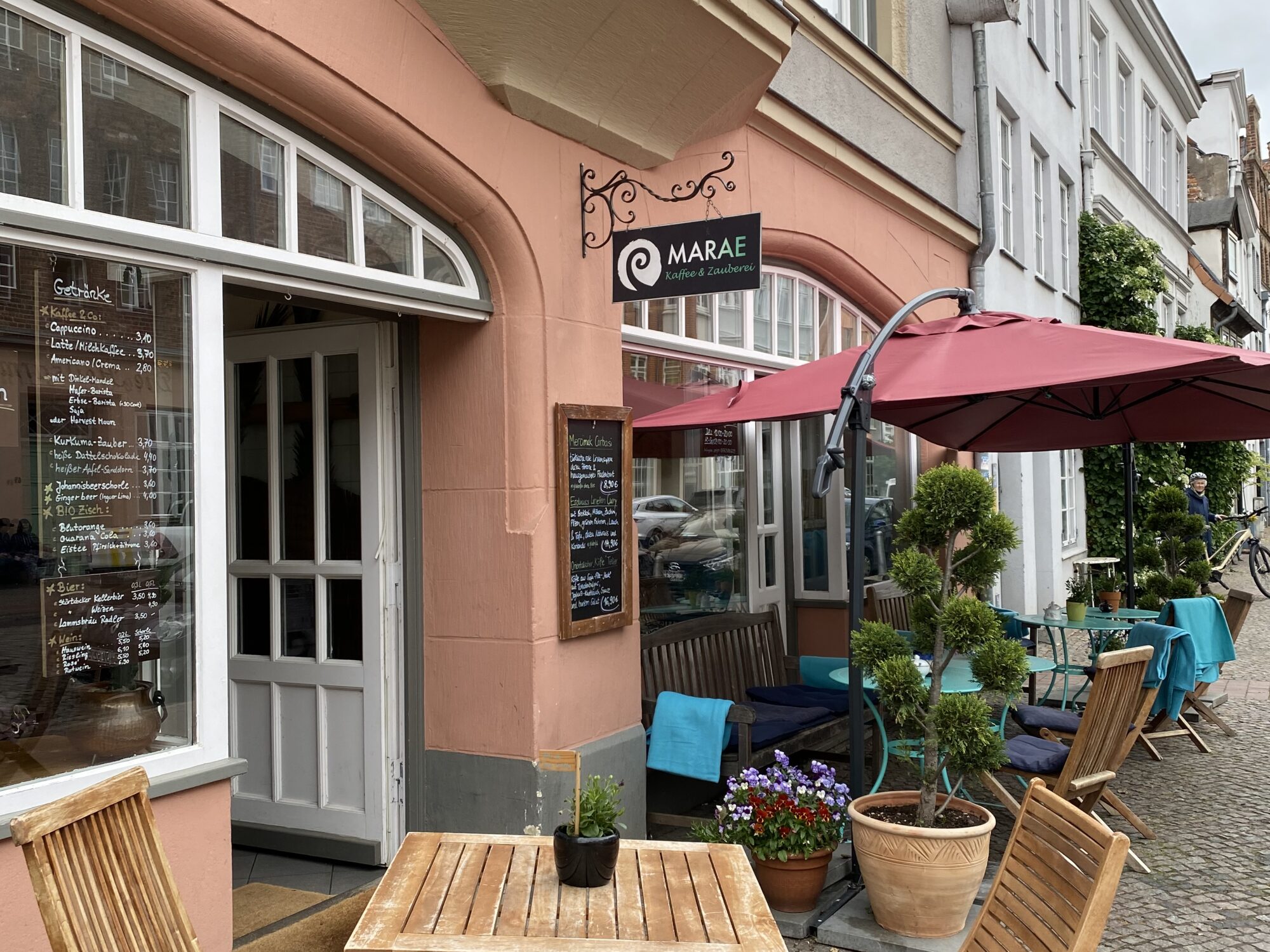
Café Marae: The place where you belong
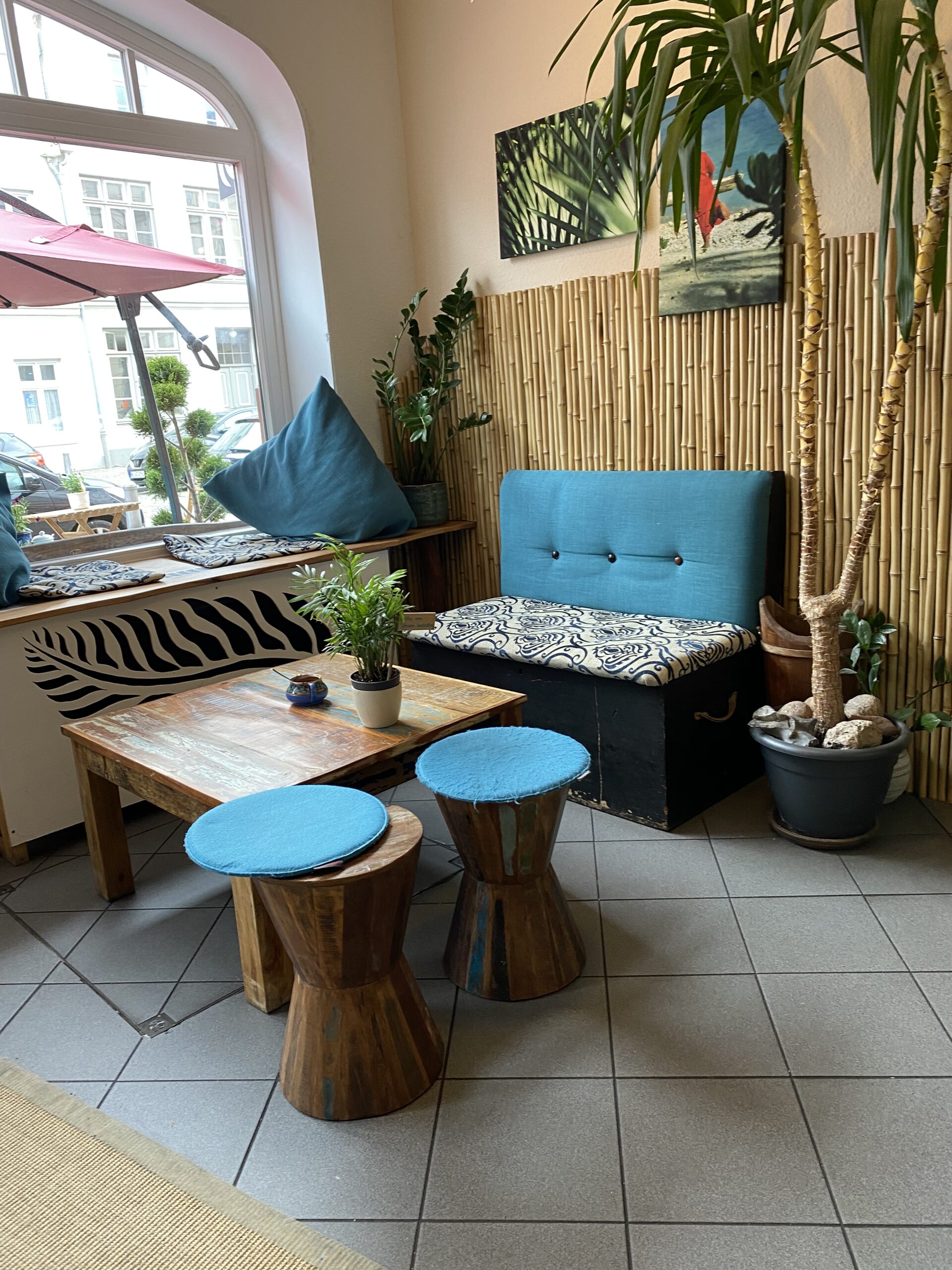
Das Café Marae wurde vor fast sechs Jahren eröffnet. Die Initiatoren Jay und Laura, die mit ihren Kindern aktuell auf einer längeren Reise sind, brachten die Idee und den Namen aus Neuseeland mit. Marae sind Versammlungsstätten der Māori-Gemeinschaften. Im weitesten Sinne also Orte, an dem Gemeinschaft gelebt und erfahren wird, sich alle einbringen und heimisch fühlen dürfen. Im Innern des Café Marae herrscht eine ungezwungene und warmherzige Atmosphäre. Einladende Kissen auf den Fensterbänken, gemütliche Sitzecken. Türkisfarbene Details, die an Lagunen, strahlenden Himmel und das Meer erinnern.
Türkis steht jedoch auch für Harmonie und Geborgenheit und damit für zwei Werte, die auch Hamo Sadiq sehr am Herzen liegen. Er ist seit einem halben Jahr Geschäftsführer des Marae. Ein junger Mann, der mir mit leuchtenden Augen das Konzept des Hauses erläutert. Der Fokus liegt eindeutig auf bio und saisonal. Die Zutaten für die veganen Speisen werden soweit wie möglich aus der Region bezogen. Auf Plastik wird verzichtet. Hamo und sein Team verstehen sich als „Gemüseretter„, denn in der Küche wird nichts verschwendet.
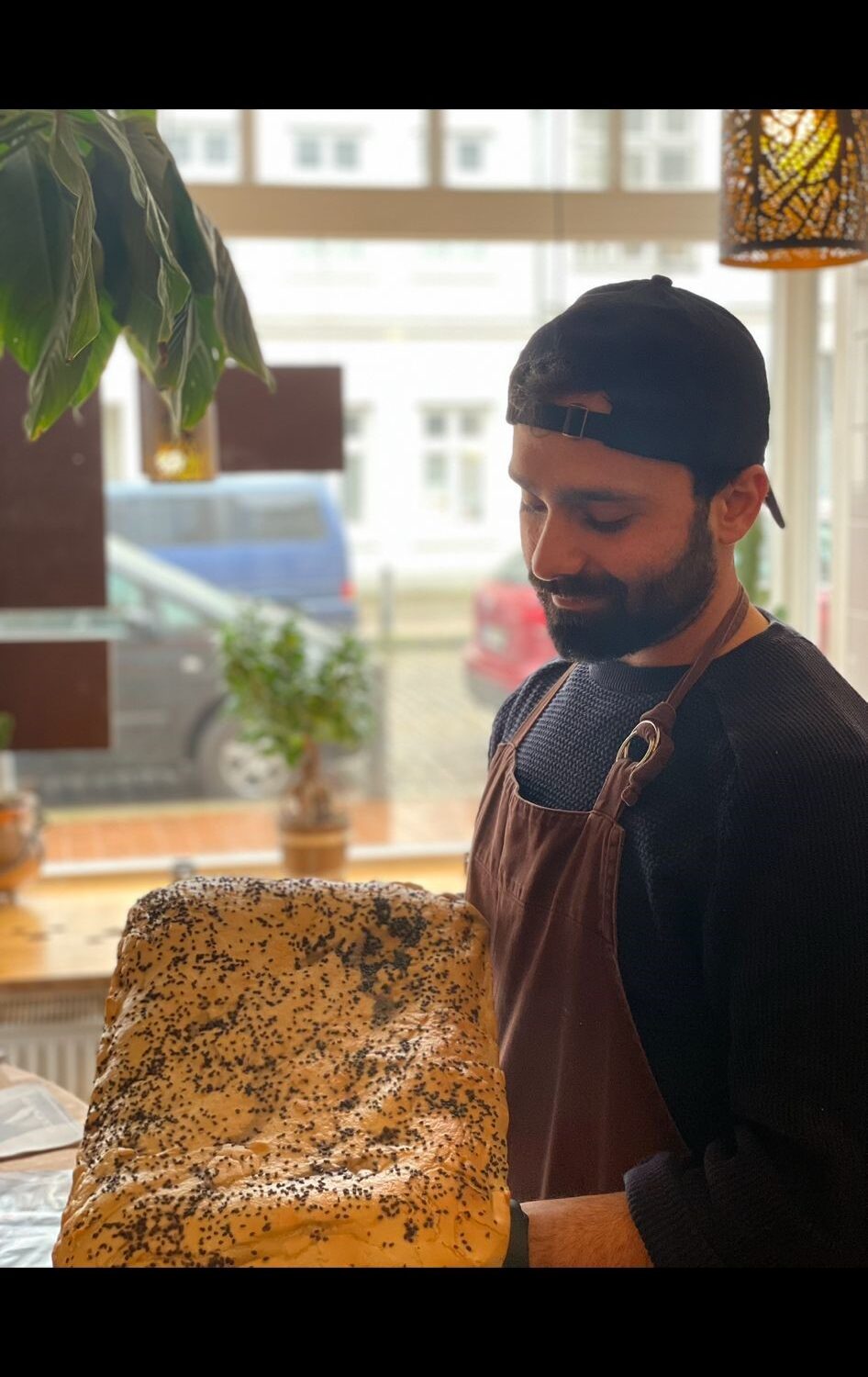
Gezaubert wird im Marae mit Liebe, Leidenschaft und Kreativität. Alle Speisen basieren auf eigenen Rezepten. Hamo erzählt, dass die Crew sehr gern Neues ausprobiert und solange an einem Rezept arbeitet bis alle vom Geschmack restlos überzeugt sind. Die Karte wechselt wöchentlich und bietet drei Gerichte, die frisch zubereitet werden. Besonders beliebt ist das Marae-Frühstück. Schau auf die Marae-Website, um die Öffnungszeiten zu prüfen.
Be yourself – there are already enough others.
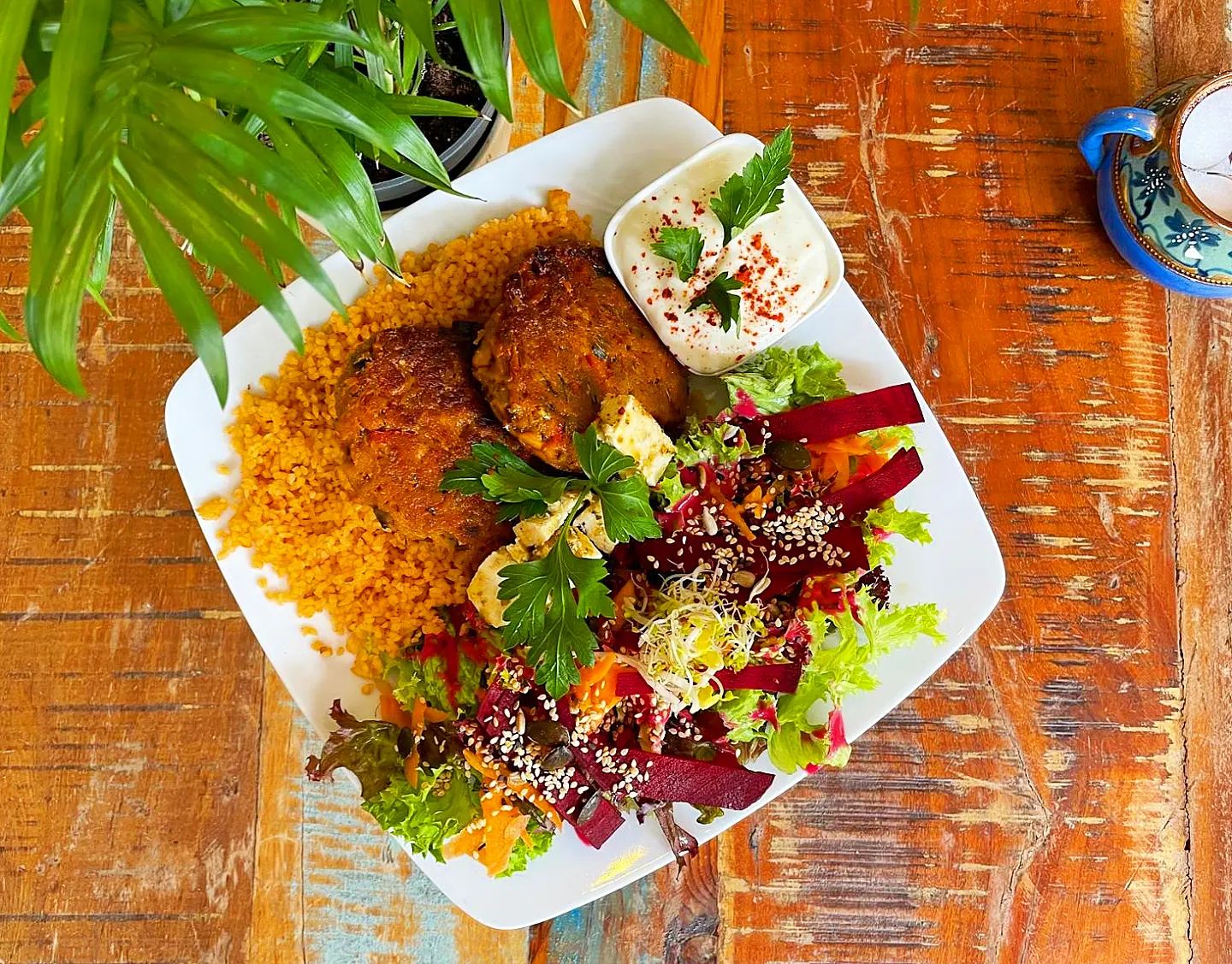
Hamo Sadiq is delighted that many of his guests return time and again, impressed by the excellent taste of the food. The vegan dishes are particularly popular, such as the köfte made with soy "mince" and mushrooms with tomato bulgur. "I've never eaten such delicious meat," a guest recently told Hamo. Everyone is welcome to ask about ingredients and express their wishes. At Marae, it's understood that people follow different dietary patterns or need to find alternatives due to intolerances. Therefore, all dishes are gluten-free, and sweeteners are exclusively date syrup.
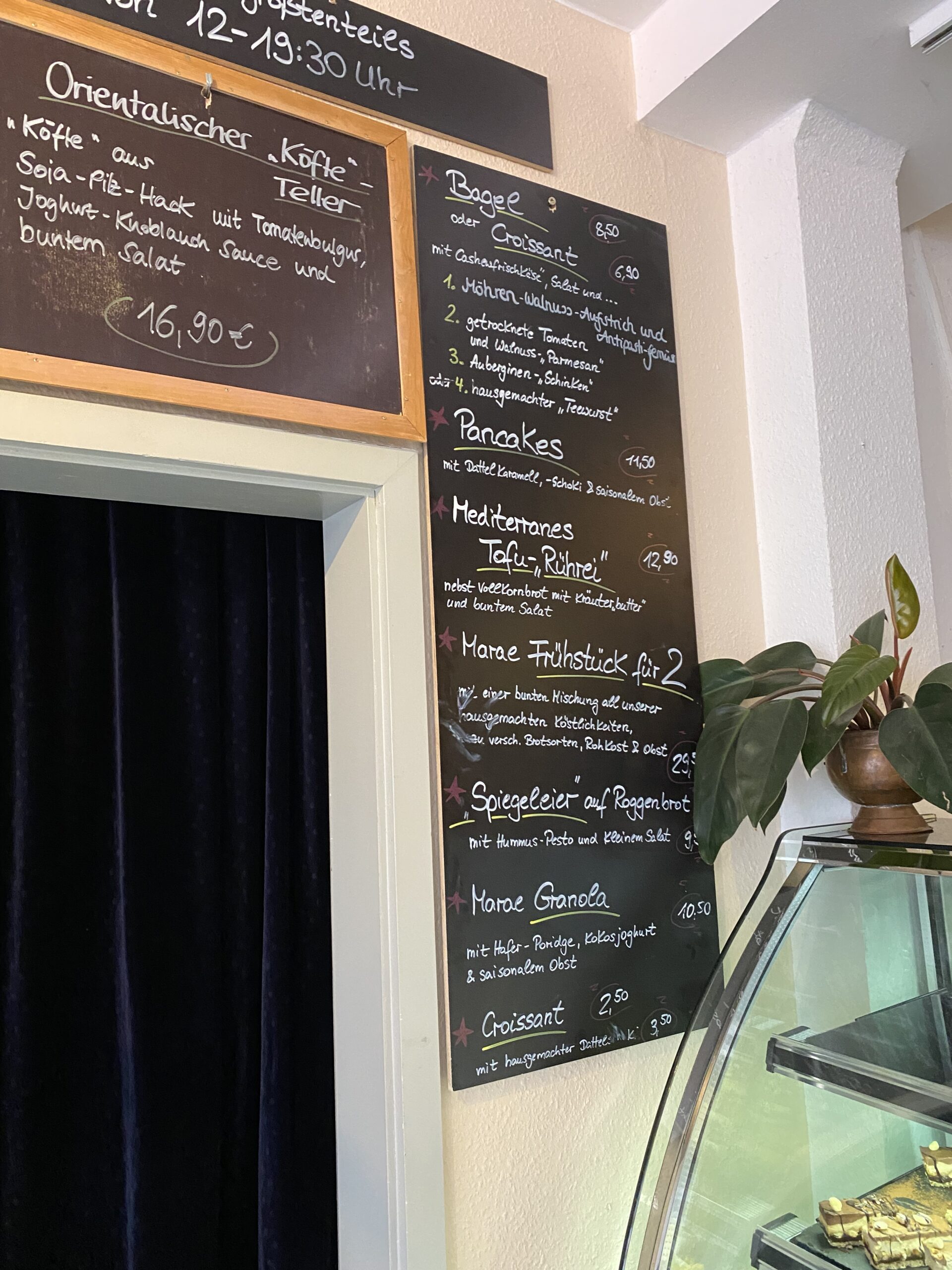
Absolutes Highlight für alle Naschkatzen und -kater sind übrigens die Raw cakes – Rohkostkuchen: Johannisbeer-Cheesecake, Zitrone-Mohn oder Schoko-Kirschkuchen, um nur ein paar zu nennen. Auch für das Kuchenbuffet wird je nach Saison viel Neues ausprobiert. Zum Abschied genieße ich noch eine Kurkuma-Zauberei, die aus Ingwer Kurkuma, Dattelsüße, Pfeffer und heißer Hafermilch zubereitet wird. Ka kite ano! Auf Wiedersehen! Ich bin sicher demnächst wieder da. Allein schon wegen der Buchweizen-Pancakes. Die muss ich probieren. Vielleicht hast auch du Lust auf eine kleine Reise ins Café Marae?