
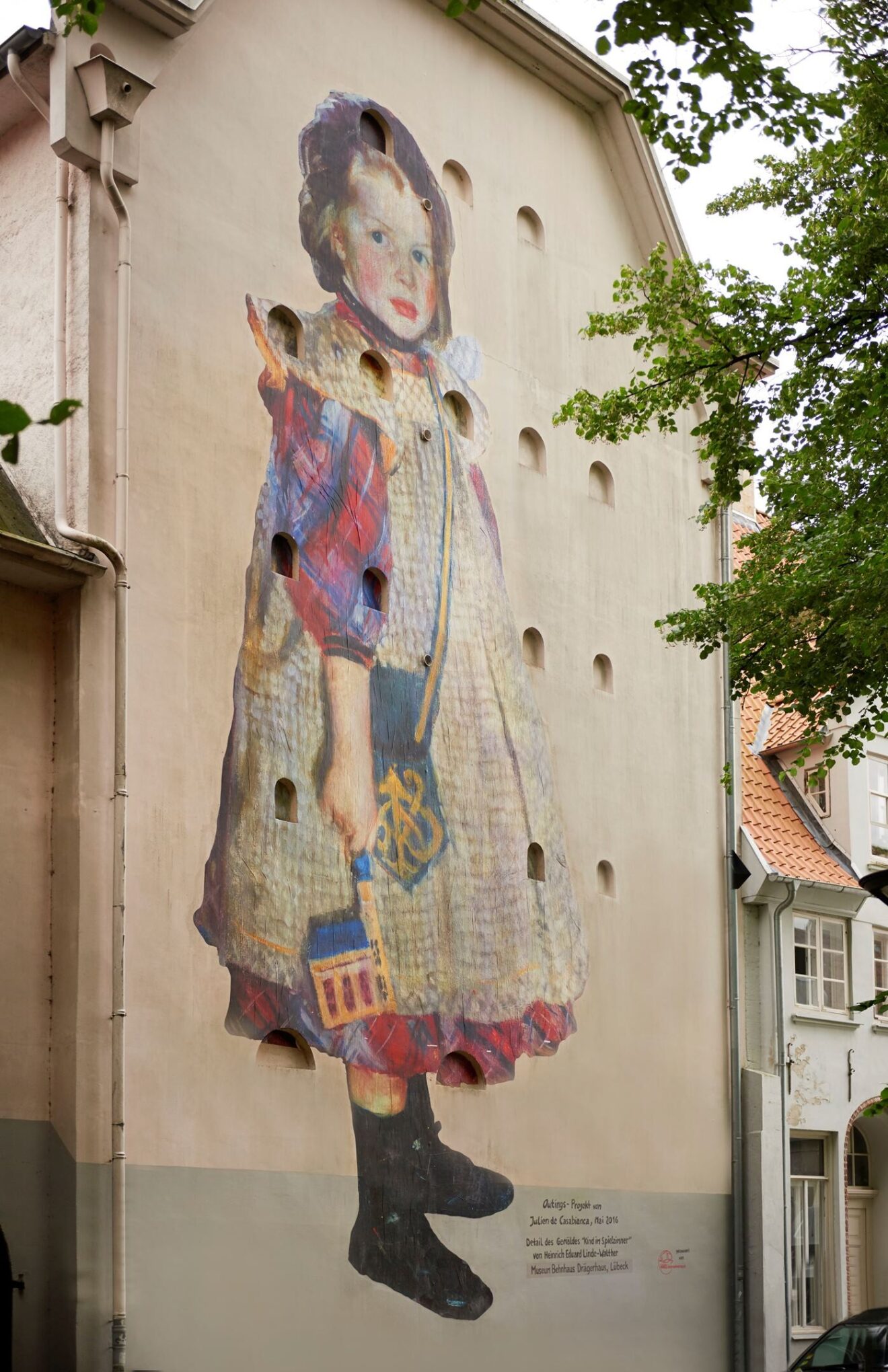
Für die Lübeck ZWISCHENZEILEN begaben wir uns auf die Spur des Gemäldes „Kind im Spielzimmer“. Nach einem Gespräch mit dem Leiter des Museums Behnhaus Drägerhaus Dr. Alexander Bastek und der Unternehmerin und Kunstmäzenin Ellen Ehrich hatte ich ein ganz besonderes Ziel im Aegidienviertel im Visier: die Hauswand eines ehemaligen Bunkers in der Schildstraße. Dort befindet sich seit beinahe 10 Jahren das überlebensgroße Mural und Portrait eines Mädchens namens Else. Es hat an der Hauswand im Quartier ganz selbstverständlich seinen Platz gefunden – fast auf Augenhöhe mit dem gotischen Turm von St. Aegidien. Die Geschichte von Elses Portrait beginnt allerdings leise und im Privaten. Vor 125 Jahren im Salon ihres Elternhauses.
The story behind the portrait
1901 war Else vier Jahre alt und lebte in Berlin. Ihr Vater, der Kunsthistoriker Walther Gensel, war seit einem ersten Treffen in Paris mit dem Lübecker Maler Heinrich Eduard Linde-Walther befreundet. Linde-Walther malte Landschaftsbilder und Stillleben, widmete sich aber auch Alltagsszenen. Darüber hinaus fertigte er für private Auftraggeber:innen Portraits von Kindern an. Modell standen ihm auch die Kinder von Verwandten. Das in Lübeck so beliebte Gemälde der Söhne seines Bruders Max Linde hatten wir im Artikel über das wiedereröffnete Behnhaus kurz beschrieben.
When Linde-Walther asked for permission to paint Else in her home environment, it was readily granted, on the condition that the painting would be used exclusively for private purposes.
Around Easter 1901, Linde-Walther painted Else Gensel's large-format portrait. It depicts an everyday scene in the living room of a middle-class household. We see several pieces of furniture and a rug. Warm brown, beige, and ochre tones dominate the scene. These are broken up by white and softly shimmering accents. Diffused daylight—presumably from an adjacent room—enhances the private, domestic atmosphere.
Else steht im Vordergrund. Sie trägt ein kariertes Kleid und eine Spielschürze. Auf dem Parkettboden verstreut liegen Bilderbücher, Bauklötze, ein Ball und weitere Spielsachen. In der rechten Hand hält sie eine kleine Kirche und hat eine Geldbörse umgehängt. Natürlich konnte sie nicht im Entferntesten ahnen, dass sie als Kunstobjekt über 100 Jahre später auf eine gotische Kirche in Lübeck blicken würde.
Faszinierend finden wir, wie es dem Maler gelungen ist, Elses Blick einzufangen: Pfiffig und beinahe herausfordernd schaut sie uns an – und strahlt zugleich eine leise Melancholie aus.

A broken promise
The portrait, titled "Child in the Playroom," was never intended for public display. However, the painter disregarded the agreement he had made with Else's father. In 1902, the painting was sold to the Museum am Dom in Lübeck. Understandably, Walther Gensel was not pleased. A breach of trust among friends, one that even in retrospect is difficult to comprehend. 125 years later, however, the joy that "Child in the Playroom" can now be seen by all of us prevails. Else's portrait is a quiet plea for art to be visible.
Else goes to play
Es dauerte eine ganze Weile bis Else ihr Zuhause im Behnhaus für ihr erstes kleines Outdoor-Abenteuer verließ. Der französische Streetart-Künstler Julien de Casabianca hatte 2014 in Paris begonnen, Handyaufnahmen von Kunstwerken zu machen, sie auszudrucken und im öffentlichen Raum anzubringen.
Die Idee dieses Outing-Projekts griffen Menschen in verschiedenen Städten weltweit auf. So auch die Lübecker Künstlerinnen Ulrike Heil und Ingeborg Pieper. Ende 2015 fotografierten sie einige Bilder im Museum Behnhaus Drägerhaus. Sie wählten Ausschnitte und brachten sie in der Lübecker-Altstadt an verschiedenen Orten an. Die Street-Art-Aktion wurde in Lübeck begeistert aufgenommen. Auch Else, das Kind im Spielzimmer, wurde von den Künstlerinnen aus dem Museum hinaus ins echte Leben geschickt. Sie fand ihren Platz in der Nähe eines Spielplatzes an der Kanalstraße und traf auf diese Weise endlich einmal auf andere Kinder.

Else moves to the district of St. Gille's
2016 besuchte Casabianca auf Initiative von Dr. Bastek das Behnhaus und wählte Else für sein Lübecker Outing-Projekt. Das Porträt des Kindes habe ihn spontan berührt, sagte er. Die passende Fläche für das gut 14 Meter große Kunstwerk wurde auf der Wand des ehemaligen Bunkers in der Schildstraße gefunden. Hier blickt Else direkt auf die kleinste der fünf großen Lübecker Innenstadtkirchen, und die Kirche, die sie als Spielzeug in der Hand hält, korrespondiert harmonisch mit dem Bauwerk, das ihr gegenübersteht. Für Else ist es eine Befreiung im doppelten Sinne: „Sie überwindet in Form des monumentalen Murals die Museumsmauern und kommt zudem aus dem Spielzimmer an die frische Luft“, so beschreibt es Dr. Bastek.
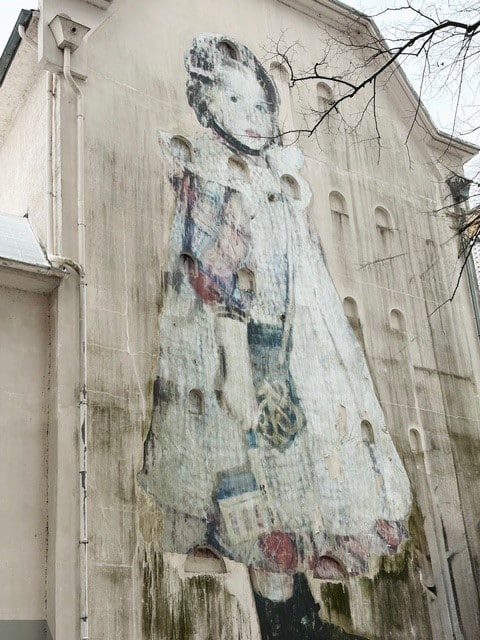
Dass Else nun bereits so viele Jahre eine liebgewonnene Bewohnerin des Aegidienvertels ist, verdankt Lübeck den HANSE-Unternehmerinnen. Ellen Ehrich ist eine der Gründerinnen dieses Netzwerks, das 2026 sein 15-jähriges Jubiläum feiert. Das Lübecker Casabianca-Projekt unterstützten die Unternehmerinnen 2015 mit einer großzügigen Spende. Und sie blieben als Beschützerinnen an Elses Seite. Das Wandgemälde erhielt eine Schutzschicht und wurde zwischenzeitlich behutsam restauriert, denn Wind und Wetter setzen der großen Else zu – das ist der Preis für den Platz an der frischen Luft.
Else strahlt wieder
Else hat in Ellen Ehrich eine treue Freundin, die sie regelmäßig besucht und sich ihr verbunden fühlt. „Else ist quasi eine Vorgängerin der HANSE-Unternehmerinnen – sie trägt sowohl Kirche als auch Geldbörse nahe bei sich“, erklärt Ellen Ehrich mit einem verschmitzten Lächeln.
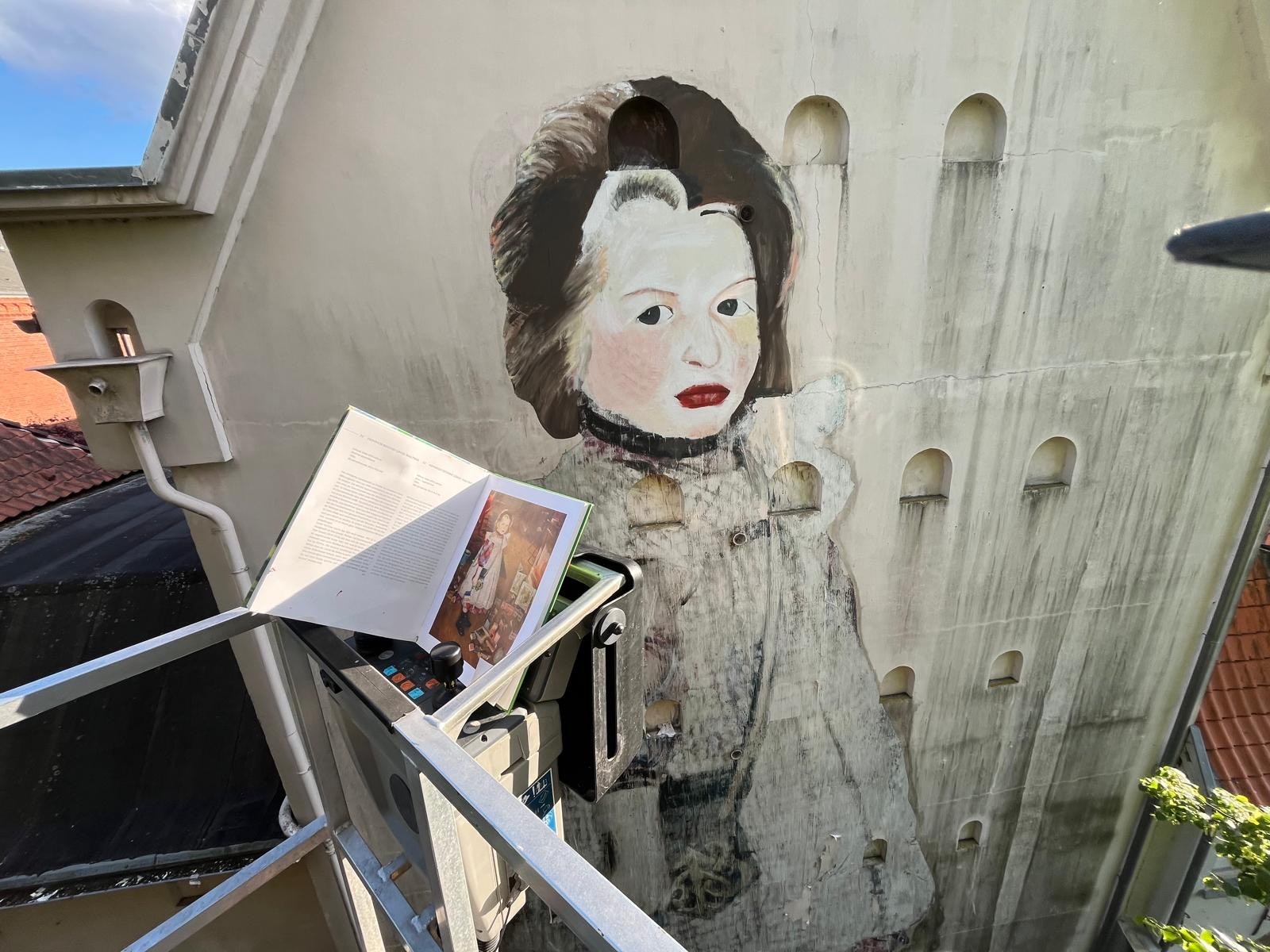
Sie wünscht sich Engagement und eine Gesellschaft, die beherzt anpackt, denn Reden ist das Eine – Tun das Andere. Ein Leitsatz, dem sie selbst folgt. So war sie es auch, die Ende 2025 den in Deutschland und Spanien wirkenden Streetartkünstler Dirk Helbig bat, den aktuellen Zustand des Wandgemäldes zu überprüfen. Gemeinsam mit den HANSE-Unternehmerinnen und Dr. Bastek setzte sie sich anschließend für eine sanfte Verschönerung des Wandgemäldes ein.
Im Juni 2026 war es so weit: Im Rahmen mehrtägiger Arbeiten und in luftiger Höhe entfernte Helbig lose Papierstücke der einst aufgebrachten Papierbahnen und brachte das Bild mit neuer Farbe wieder zum Strahlen. So kann Else mindestens fünf weitere Jahre von ihrem Frischluft-Platz aus auf die St.-Aegidien-Kirche schauen und Lübecker:innen wie touristische Gäste erfreuen.
A letter from Rendsburg
Dr. Bastek's initiative met with a great response and triggered extensive media coverage of the Lübeck outing project. Else's face became known far beyond Lübeck – and so a very special letter eventually reached the Behnhaus. It was written by Else Gensel's elderly son. He described how his mother had always remembered being painted as a little girl. But the family hadn't known what had become of the picture. The surprise was all the greater, then, to suddenly see the childhood portrait again in a newspaper article.
Else – the traveler
Im Laufe der Jahre war das „Kind im Spielzimmer“, das heute zu den bedeutenden Werken des deutschen Impressionismus zählt, in Museen im In- und Ausland zu Gast. 2026 war es nach einer Station in Baden-Baden auch im Museum Barberini in Potsdam in der Ausstellung „Avantgarde. Max Liebermann und der Impressionismus in Deutschland“ zu sehen.
Wohin auch immer Else reist, sie kehrt stets nach Hause ins Behnhaus zurück, wo sie im Original bewundert werden kann. Unverrückbar und monumental ist ihr überlebensgroßer Zwilling jederzeit in der Schildstraße zu sehen, und ein Besuch lässt sich wunderbar mit weiteren schönen Erlebnissen verbinden, etwa mit dem Besuch der St. Aegidien-Kirche, der Kunsthalle St. Annen oder einer kleinen Auszeit im Café Konvent.
Cover image: Lübeck Museums, Museum Behnhaus Drägerhaus
Dear Mrs. Schwartz!
Es ist wunderbar , dass Sie über Else schreiben und ihren Weg in allen Positionen zeichnen .
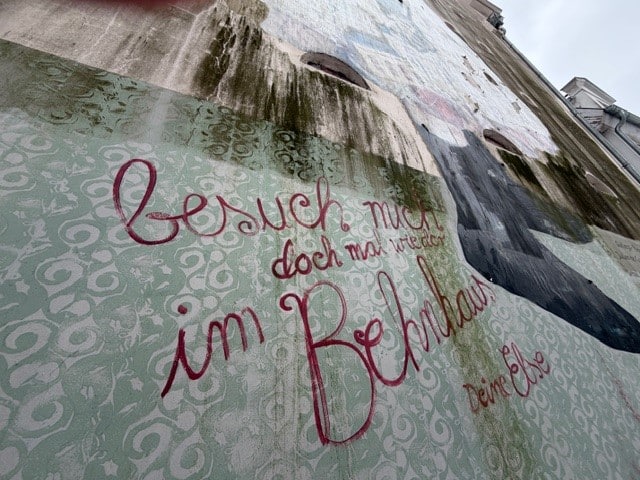
Aus einer spontanen Idee heraus , habe ich vor einiger Zeit über Elses Zustand am Hochbunker ans Behnhaus geschrieben ( wie schon seit 2016 regelmäßig, wenn die Schuhe eingerissen oder abgefetzt waren ); Else ginge es wirklich elend …
Und bekam eine wunderbar erläuternde Antwort von Dr Bastek ! Dankbar und erfreut nahm ich die Tatsache hin , dass Julien de Casabianca eben möchte , dass sein Werk verlischt.. und man somit kaum etwas tun kann .
Und dann erhielt ich einen Anruf von Frau Ehrich , dass man doch einen Weg gefunden habe , Else quasi zu erfrischen und im Mai damit beginnen werde.
Das Alles nur in Kürze , Sie können sich sicher die große Freude über dies keineswegs erwartete Erlebnis vorstellen !
Mit freundlichen Grüßen
Bettina Spohr
Weberstr 1F
23552 Lübeck
Dear Mrs. Spohr, then you are clearly one of Else's thoughtful neighbors who have cared about her well-being since 2016. Thank you for sharing the good news of her upcoming rejuvenation treatment with us. I'm very happy about that. Many thanks in return!
Morgen geht es los .