
The 1960s in photographs
by Hans Kripgans
„Do more of what you love“ sollte die Devise für jeden einzelnen Lebenstag und nicht nur ein Vorsatz für ein neues Jahr sein. Mich begeistern Geschichte und vor allem die visuelle Zeitgeschichte und die Werke von Berenice Abbot, Brassaï, Doisneau, August Sander oder Steve McCurry. Fotos fangen bedeutende und hoch komplexe historische Entwicklungen oder auch nur einzelne Momente in einem einzigen bleibenden Motiv ein. Meine Leidenschaft gilt der Alltagsfotografie. Was liegt also näher als ein Besuch im Willy-Brandt-Haus Lübeck, einer meiner liebsten Lübecker Kultureinrichtungen. Dort ist nämlich noch bis zum 13. März die Fotoausstellung „Lübeck in Bewegung – Die 1960er Jahre“ zu sehen. Sie präsentiert Aufnahmen des bekannten Fotografen Hans Kripgans, der bis 1975 leitender Fotograf und „Das Auge“ der Lübecker Nachrichten war.
The power of images
In motion! A visual journey into history that is so much more than a mere retrospective. In this case, I'm revisiting my own childhood and looking back at the exciting years of the economic miracle when my parents were young. The scenes from the everyday lives of Lübeck's residents reveal the issues that preoccupied West German society during those years. Some of them are still relevant today, and just because the images are black and white doesn't mean life wasn't.
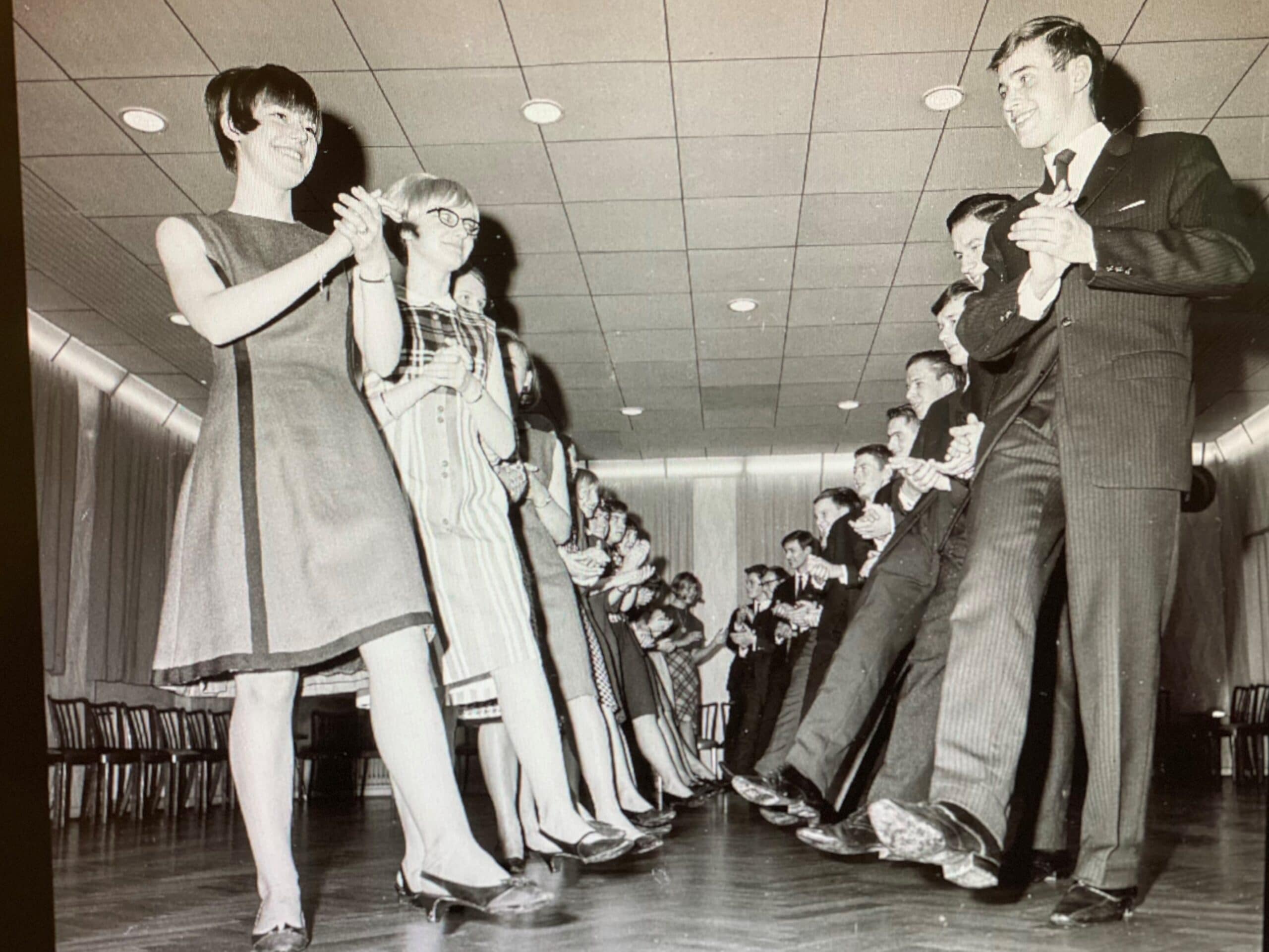
Don't trust anyone over 30: Children & Youth
This contrast between "young" and "old" has existed for centuries. As early as 2000 BC, a cuneiform text stated: "Our youth is degenerate and unruly. Young people no longer listen to their parents. The end of the world is near." The 1960s were no exception. Society was undergoing rapid cultural change, leading to tensions between generations. A shift in sexual morality and the widespread availability of television accelerated this transformation. With the Beatles and the Rolling Stones, a new, defining attitude to life arrived in Lübeck. Fashion was a visual antithesis to stuffy bourgeois values: short skirts, pinafore dresses, leather jackets, bell-bottoms. Bold designs in patent leather, velvet, and corduroy. (Um: isn't that incredibly trendy again: everything comes back around...) Parents feared their sons and daughters might end up as "bums" or "rockers." Imagine: teenagers simply meeting up to "chill" on the grass in front of the Holsten Gate.
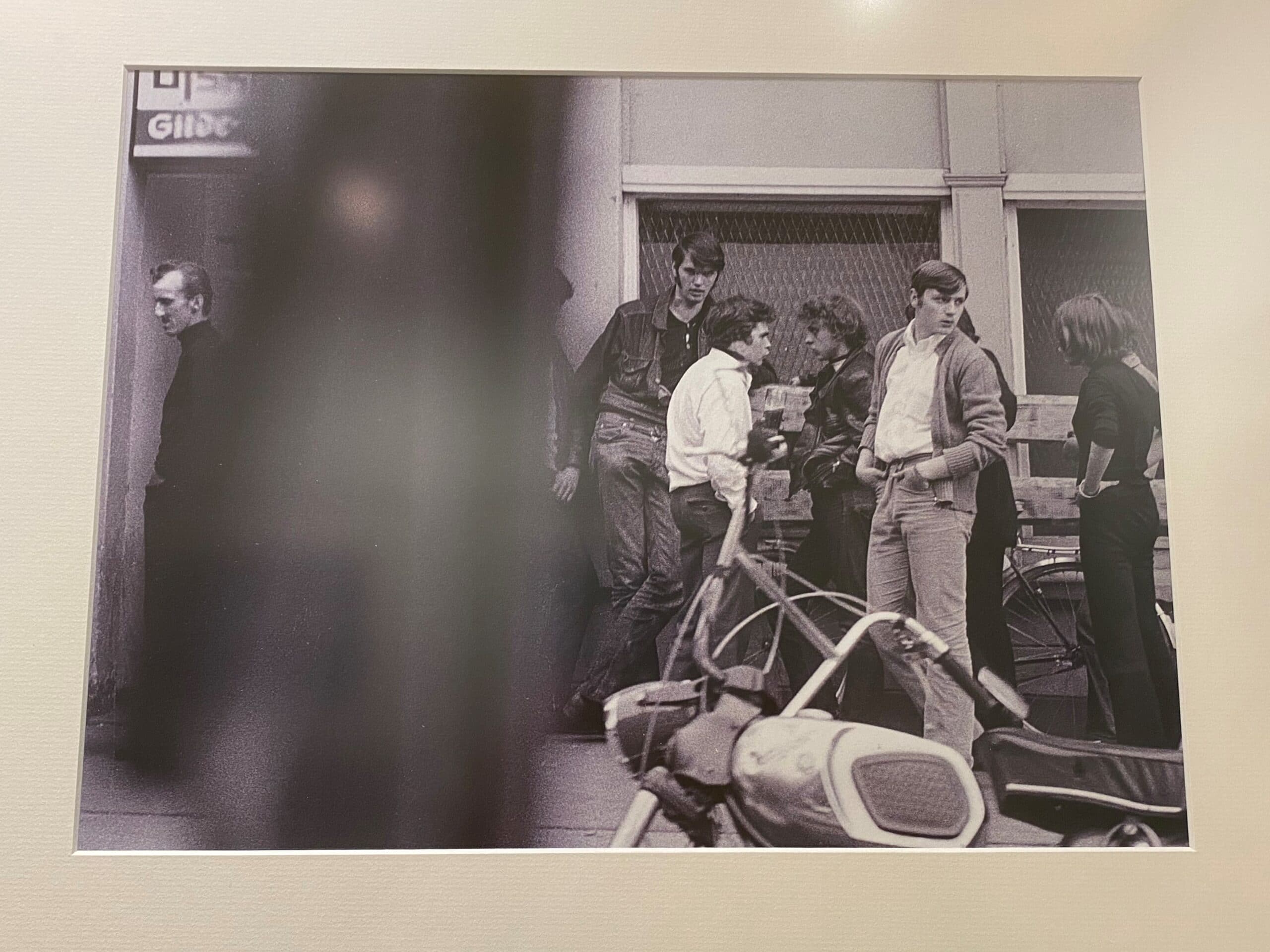
“Rockers” in Hüxstraße, 1969, (c) Lübecker Nachrichten / Hans Kripgans 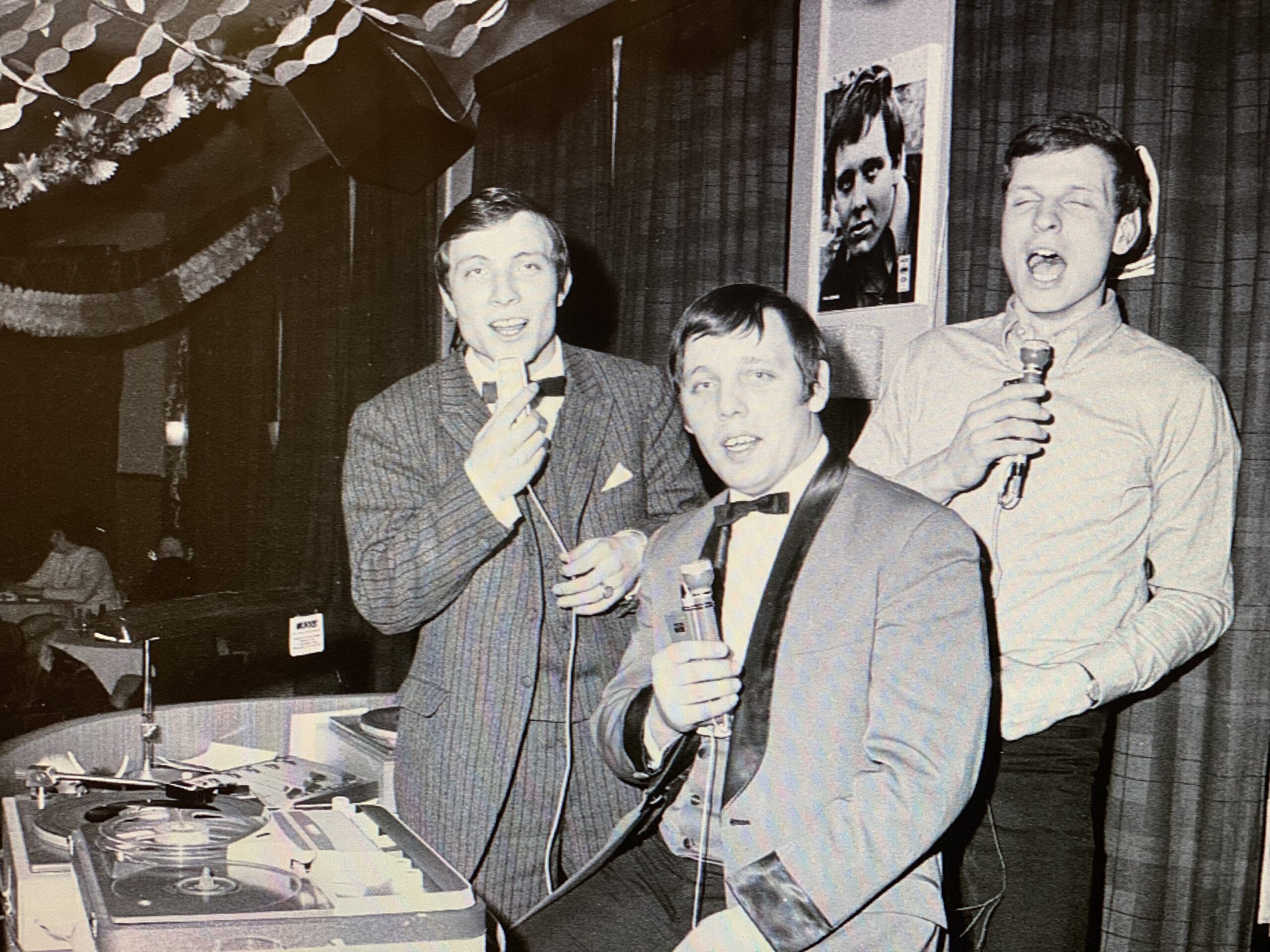
The 3 DJs Helmut, Phil and Snoopy, 1968, (c) Lübecker Nachrichten / Hans Kripgans 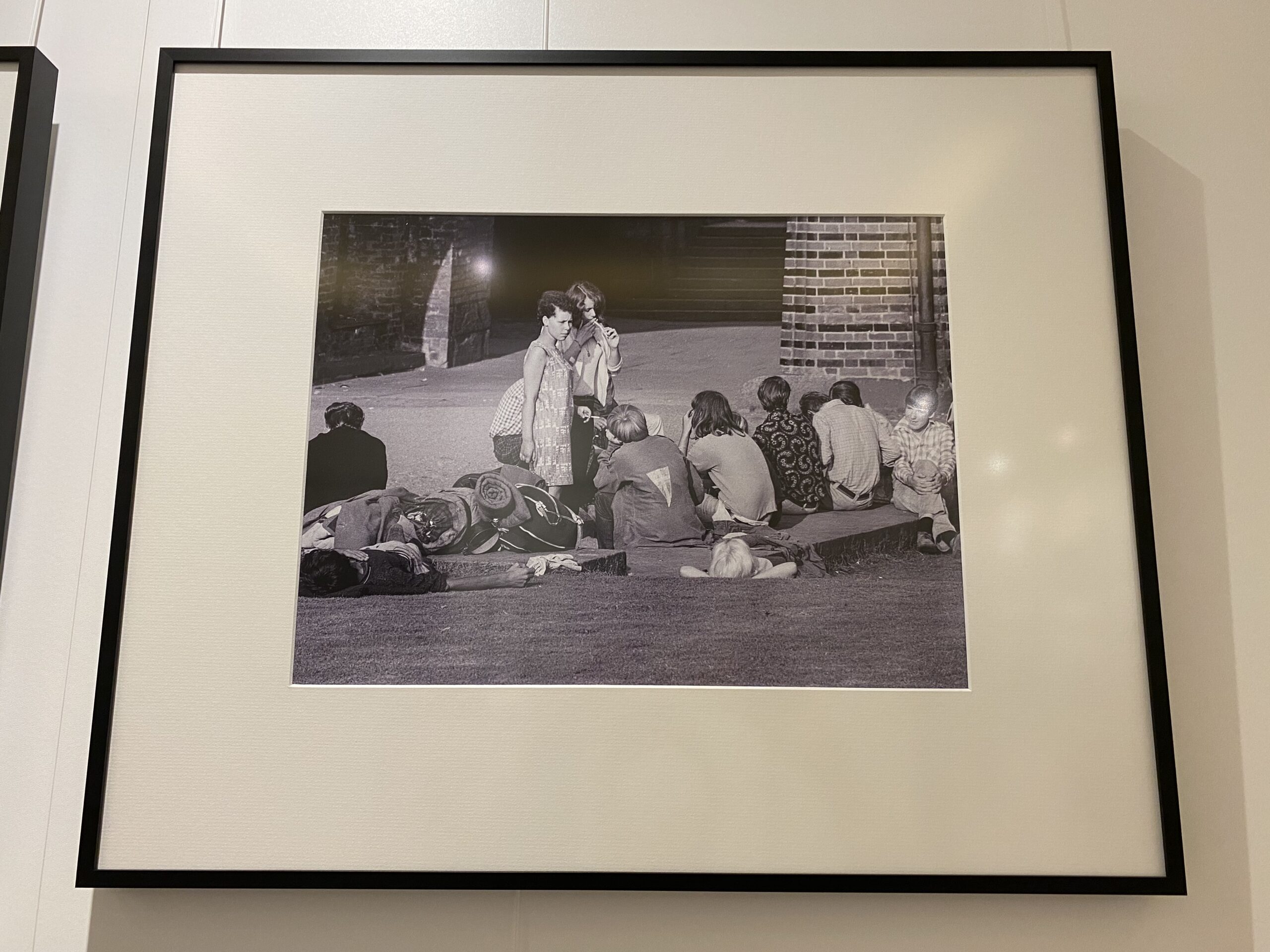
"Hippies" at the Holsten Gate, 1966, (c) Lübecker Nachrichten / Hans Kripgans 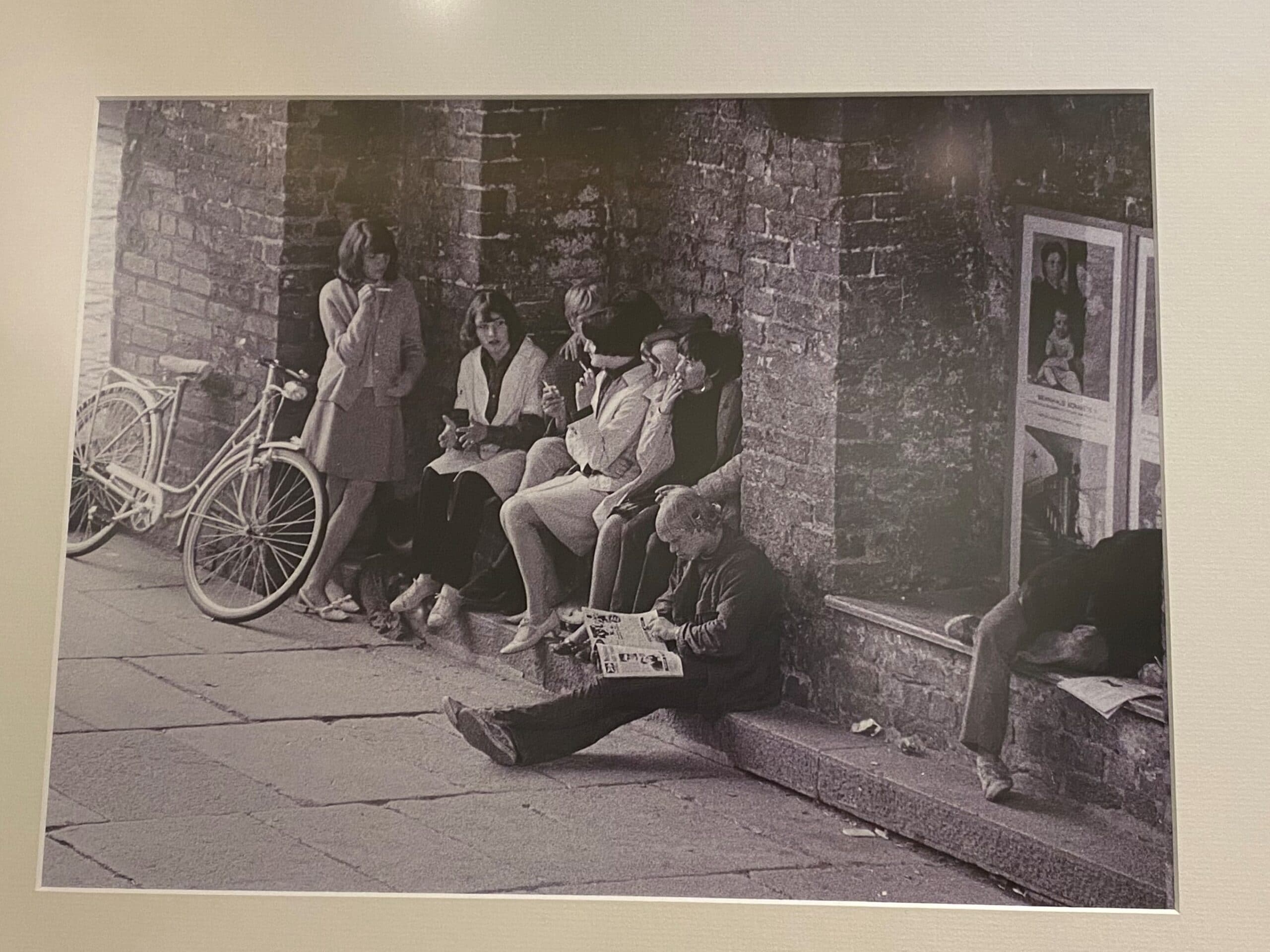
After school, 1967, (c) Lübecker Nachrichten / Hans Kripgans
The mustiness under the gowns: Protests & demonstrations
The 1960s were a decade of upheaval for many reasons. I ask myself: have there ever been decades without upheaval? The construction of the Berlin Wall on August 13, 1961, was undoubtedly formative for Germany and Europe, indeed for the balance of power throughout the world in the decades that followed. Its effects are still felt today. The Easter Marches originated in the 1960s. In Lübeck, too, citizens of all generations became involved in the fight against nuclear power and nuclear weapons. People's fears were further fueled by the Cuban Missile Crisis and the East-West conflict. The Shah's visit and the death of Benno Ohnesorge, the assassination attempt on Rudi Dutschke, and the emergency laws drove primarily young people into the streets. Happenings and sit-ins for a transformation of society ensued.
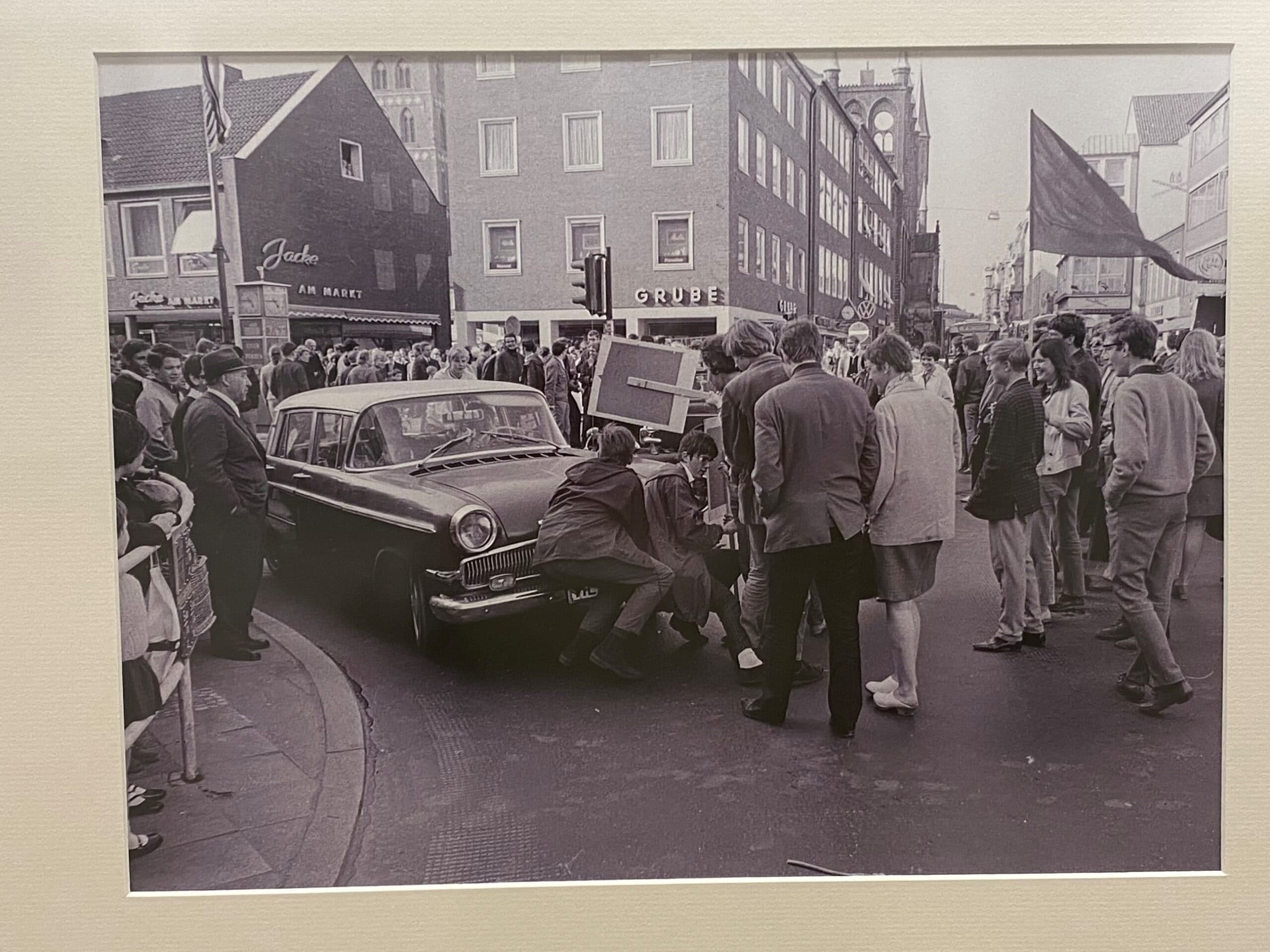
Protest against the emergency laws, 1968, (c) Lübecker Nachrichten / Hans Kripgans 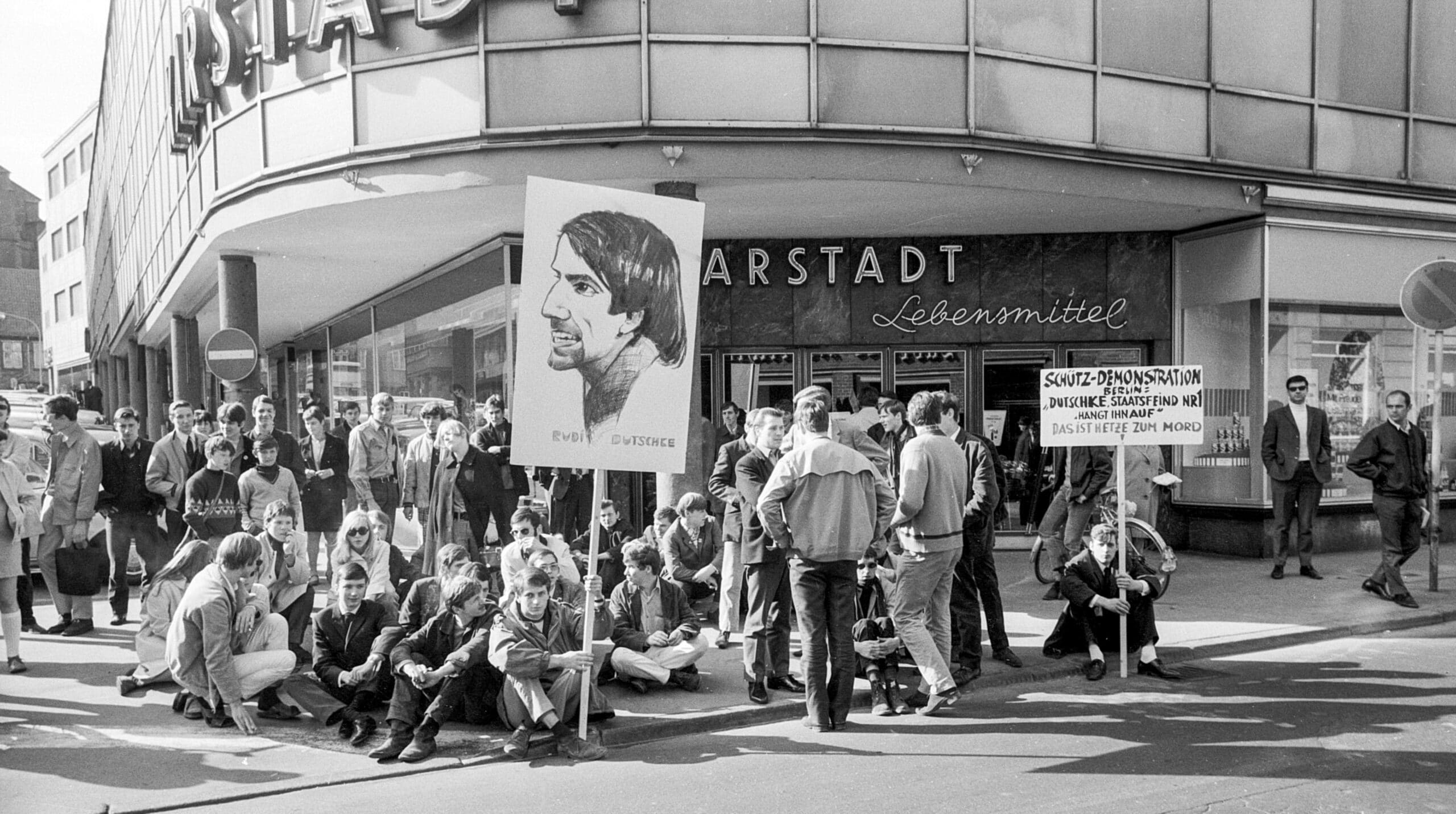
Dutschke demonstration, 1968, (c) Lübecker Nachrichten / Hans Kripgans 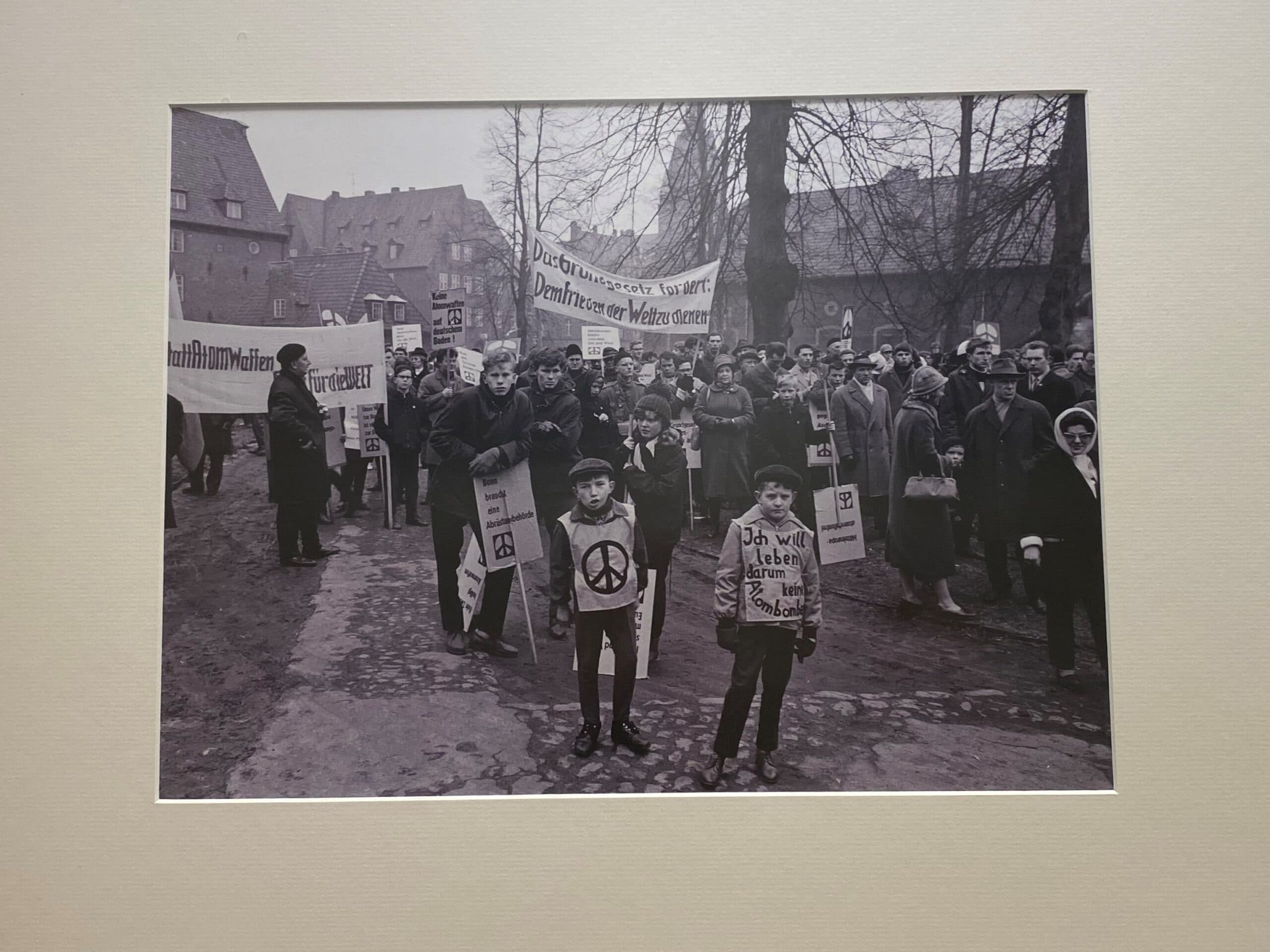
Easter March, 1964, (c) Lübecker Nachrichten / Hans Kripgans
Shop 'til you drop: Transportation & Shopping
Lübecks Antlitz veränderte sich. Autos, überall Autos! Es entstanden neue und vor allem breitere Straßen, Parkplätze und Parkhäuser. Brücken wurden gebaut. Darunter die Herrenbrücke, die in der Erinnerung aller Zeitgenoss:innen just dann hochgeklappt war, wenn man selbst dringend rüberfahren wollte. Übrigens auch eine gern vorgebrachte Ausrede in Fällen von Unpünktlichkeit. Aktuell geht es uns unter dem Leitmotiv „Lübeck Übermorgen“ darum, unsere Mobilität in Lübeck neu zu organisieren. Alternative und nachhaltige Transportmöglichkeiten zu entwickeln, um die Umwelt zu schonen und die Lebensqualität zu erhöhen.

Lübeck's old town, with its new large stores like Karstadt, Kepa, Haerder, Anni Friede, and C&A, offering a wide selection and spacious sales areas, became an attractive destination. With rising incomes, luxury goods became affordable for many West Germans. Shop windows were lavishly decorated. People dressed up when they went into town and always combined shopping with a visit to a café. Ladies, of course, kept their hats on.
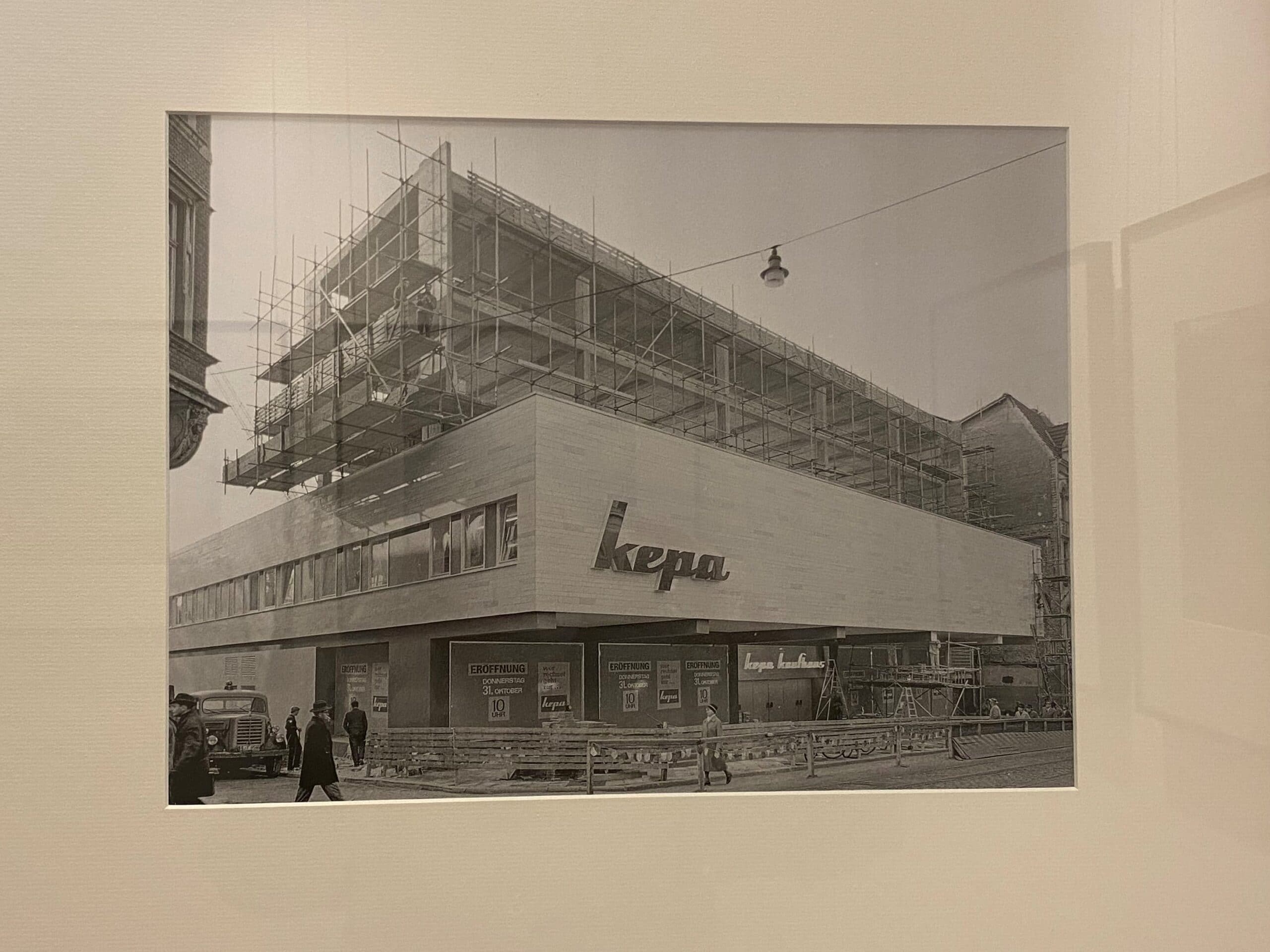
Kepa department store, Holstenstraße, 1963, (c) Lübecker Nachrichten / Hans Kripgans 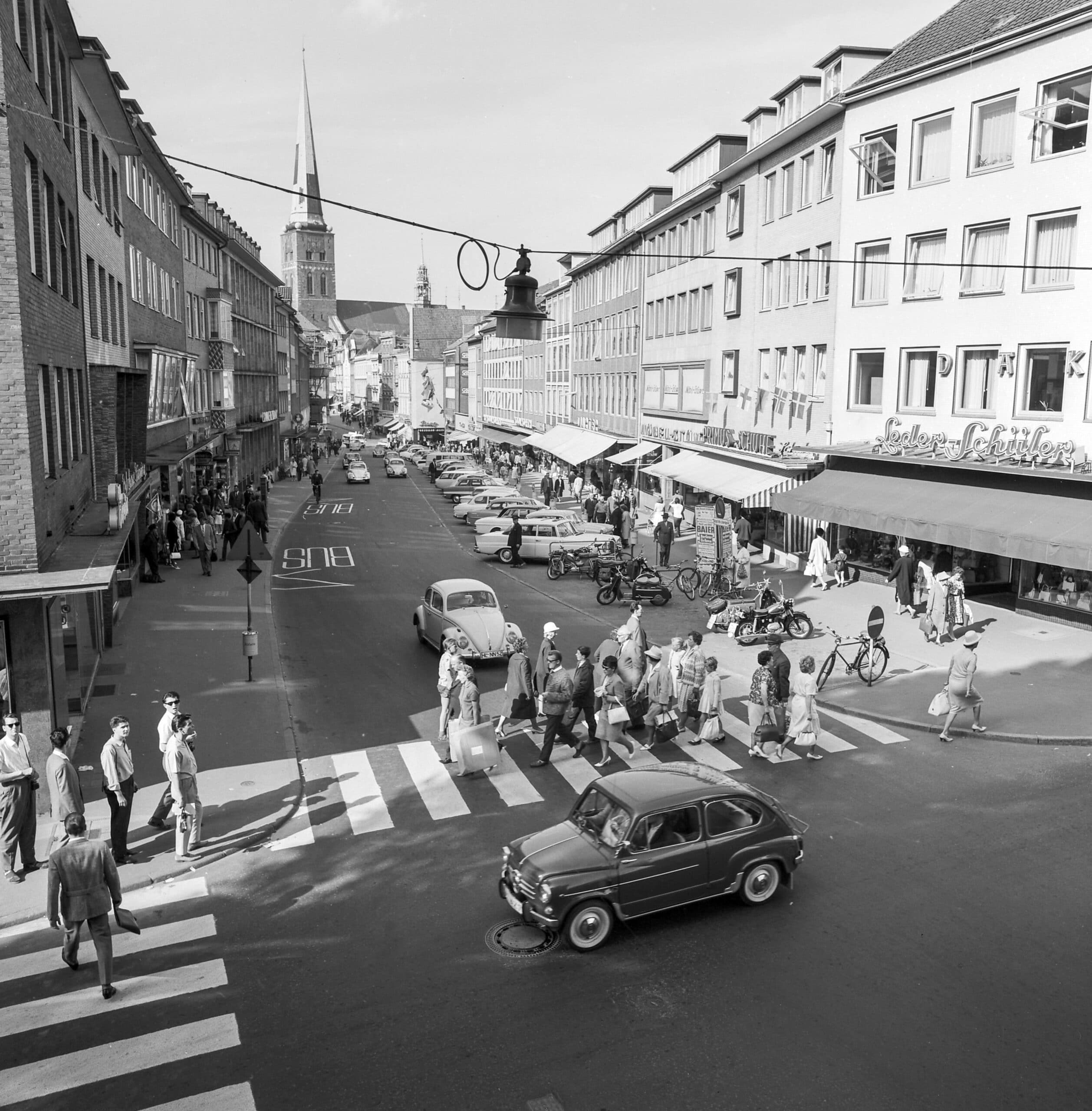
Intersection of Breite Straße and Dr. Julius-Leber Straße, 1962, (c) Lübecker Nachrichten / Hans Kripgans 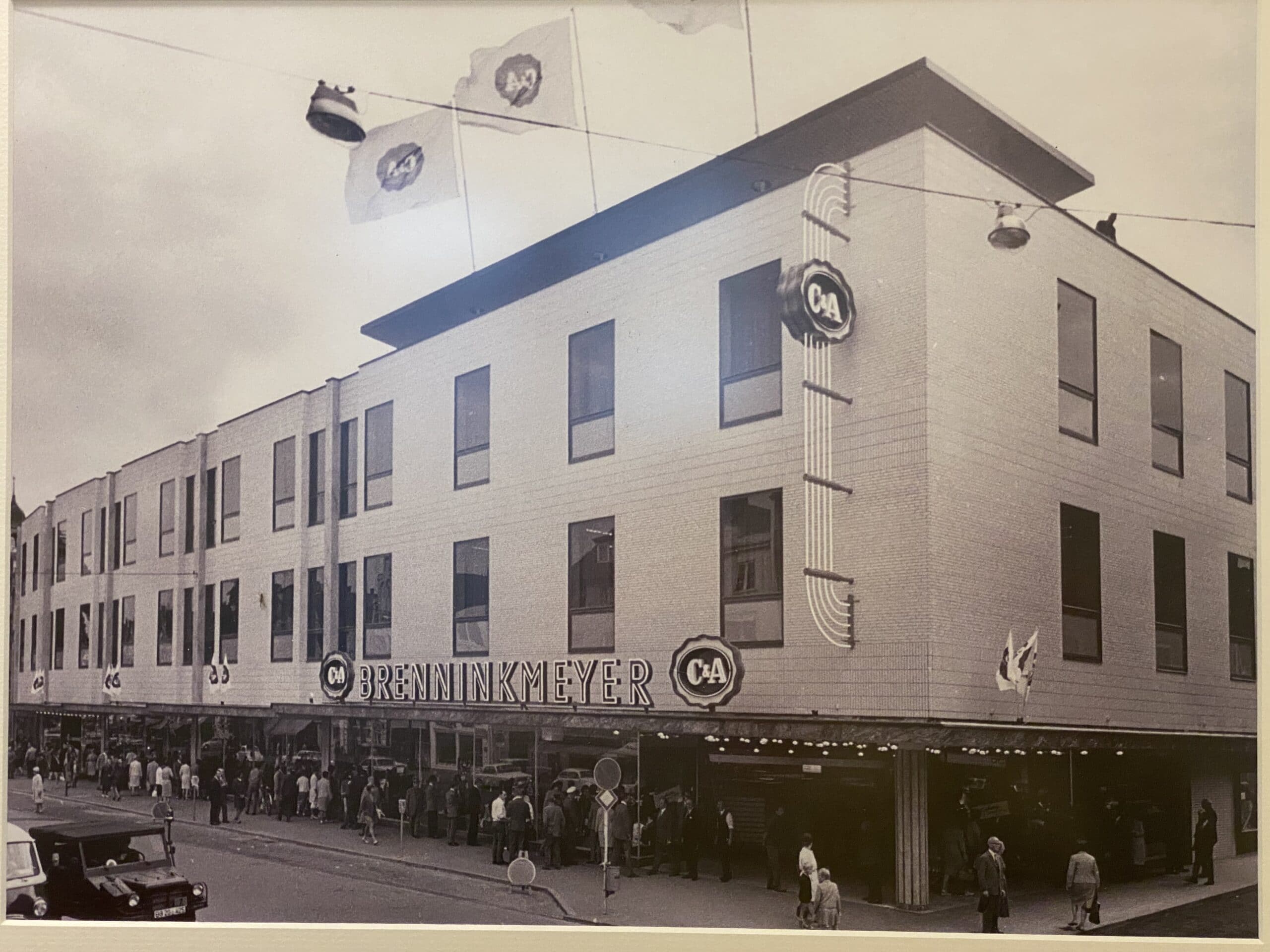
C&A building Mühlenstraße, 1967, (c) Lübecker Nachrichten / Hans Kripgans 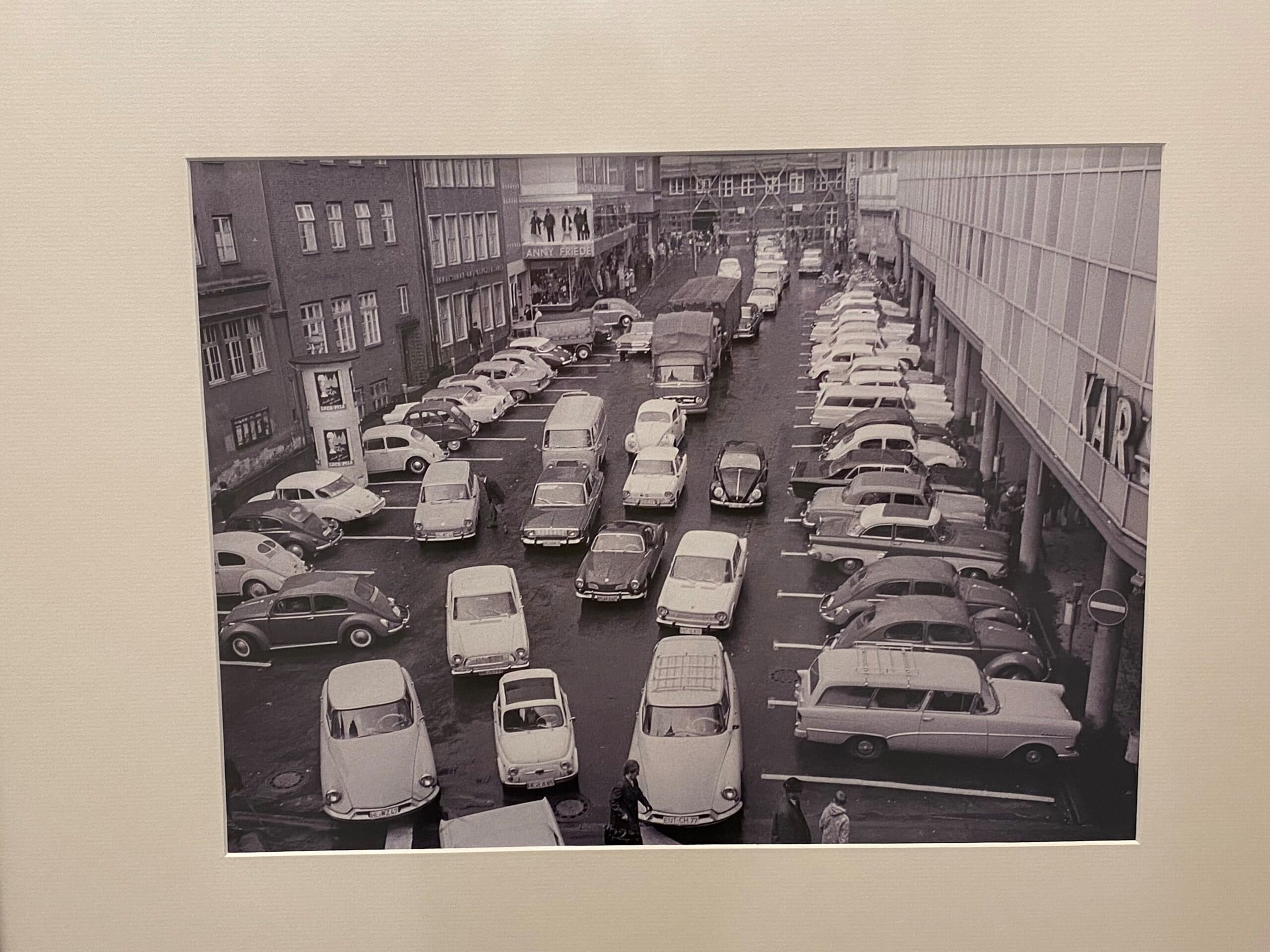
Schrangen, 1965, (c) Lübecker Nachrichten / Hans Kripgans
Zu jedem Motiv lässt sich eine Geschichte erzählen. Der Platz hier reicht nicht aus. Weitere Ausstellungsbereiche widmen sich den Themen „Bauen & Wohnen“ und der Person Willy Brandt, der seiner Geburtsstadt sein Leben lang treu blieb, seine hier lebende Mutter Martha Kuhlmann und den Stiefvater regelmäßíg besuchte, hier politische Weggefährten traf und jeweils zum Abschluss des Wahlkampfes in den Jahren 1961, 1965 und 1969 in Lübeck auftrat. Dem Leben und Wirken Willy Brandts ist die Dauerausstellung im Willy-Brandt-Haus Lübeck gewidmet. Der Eintritt ist kostenfrei.
The Kripgans exhibition makes it abundantly clear once again that humans have ALWAYS been and are oriented towards the future. Every single person is part of this long and fascinating story and connected to the people of the past and the future.
A catalogue for the exhibition "Lübeck in the 1960s" would be fantastic – especially on the topic of building and housing. Has the city planning office published anything on this recently?
– especially regarding the topic of construction and housing. Has the city planning office published anything on this recently?
Dear Mr. Fischer, I am not aware of that, but I will gladly look into the matter.
Lieber Herr Fischer, die Kollegen des Fachbereichs haben auf dieses Dokument verwiesen. https://bekanntmachungen.luebeck.de/dokumente/d/1489/inline
Beste Grüße!