
Am vergangenen Wochenende war ich mal wieder in Schlutup, Lübecks kleinstem Stadtteil, der nicht automatisch auf jeder Lübecktrip-ToDo-Liste steht, den ich persönlich jedoch sehr mag. Per Rad lässt sich Schlutup von Lübeck aus in rund 30 Minuten erreichen, vom Lübecker ZOB am Hauptbahnhof geht es per Bus dorthin.
I highly recommend an early summer excursion to this former fishing village on the Trave River, as it holds many hidden treasures that aren't immediately obvious. For many decades, Schlutup was a stronghold of the fish industry. Numerous smokehouses were established as early as the 19th century. In the village center, between Schlutuper Kirchstraße and Hinter Höfen, several old fishermen's houses have been preserved to this day.
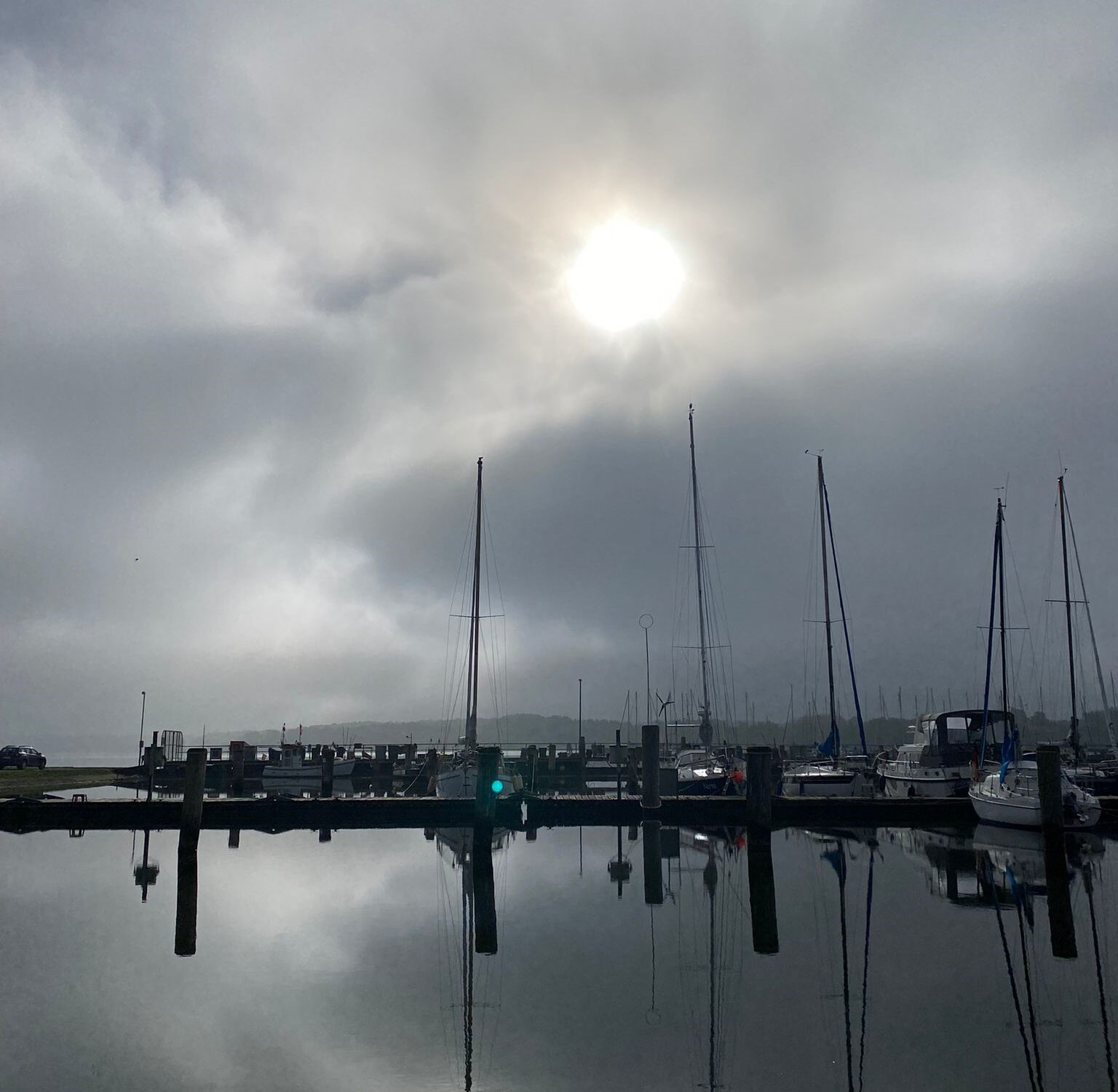
Ein besonders schöner Blick über die Trave bietet sich dir am Schlutuper Hafen, den du sehr gut über den Mühlenweg erreichen kannst.
St. Andrew's Church, Schlutup
In the heart of the village, the former fishermen's church, built in the Brick Gothic style, is well worth a visit. It was first mentioned in 1425. Until 1436, the church belonged to the parish of St. James. The limestone baptismal font dates from the 13th century. The church tower still serves as a landmark for boatmen and sailors on the Trave River. I enjoy sitting in quiet contemplation in the church interior, which is almost shaped like a Hanseatic cog, and letting the light streaming in through the stained-glass windows wash over me.
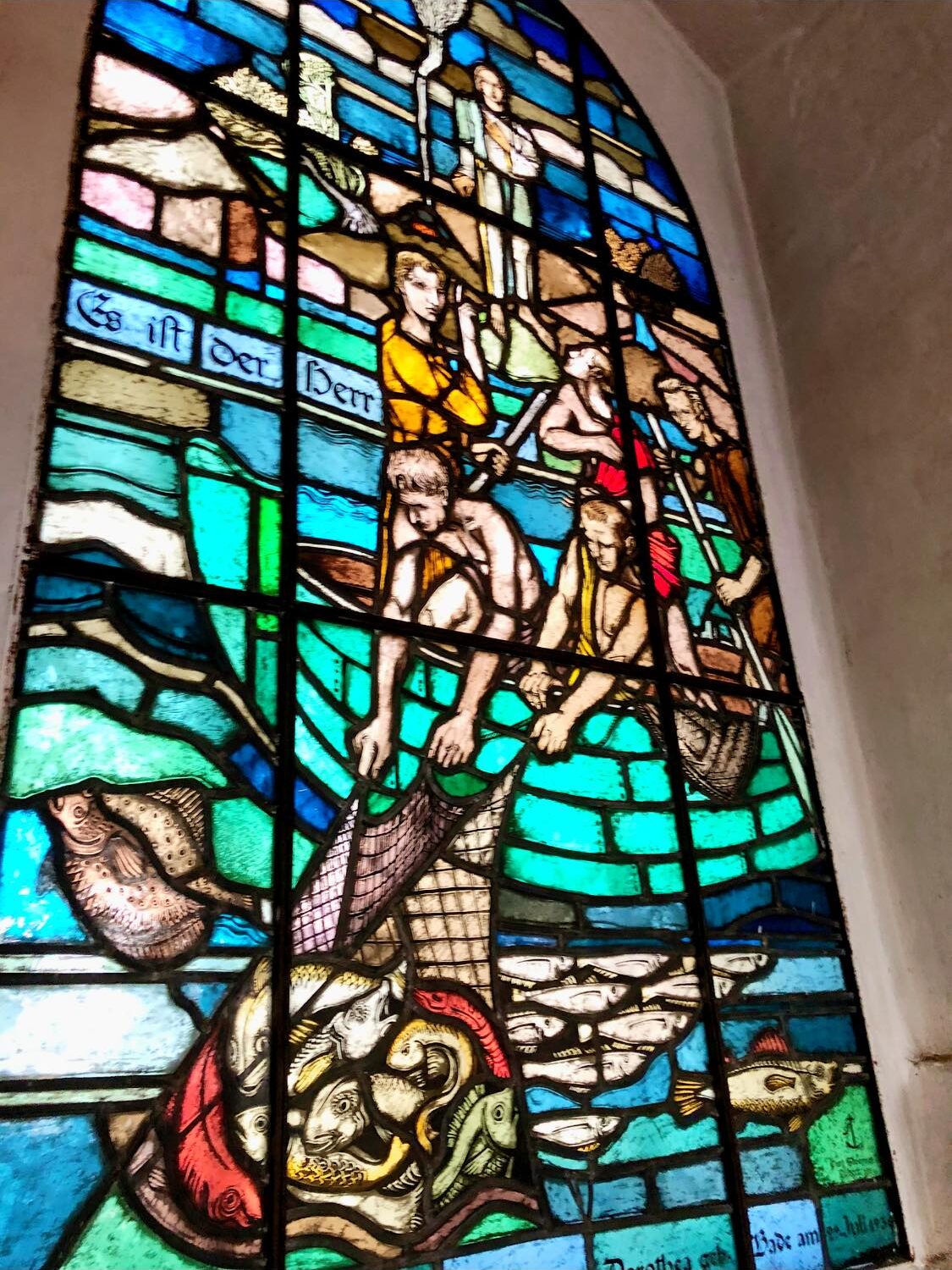
Incidentally, the glass artist Curt Stoermer also created the memorial to returning prisoners of war under the Lübeck Town Hall arcades, which you've probably already noticed. A short digital tour will give you a first impression of the church's interior.
Virtual church visit
It doesn't get any greener than this.
Schlutup lies directly adjacent to the Lübeck city forest, Lauerholz. It is surrounded by wetlands and moorland lowlands. Numerous opportunities for hiking or cycling await you. For example, around the idyllic Schwarzmühlenteich pond, in the middle of which runs the state border between Schleswig-Holstein and Mecklenburg-Vorpommern and which flows into the Schlutuper Wiek bay. Or in the extensive Palinger Heide nature reserve. For long stretches, you'll hardly encounter another soul on the narrow sandy path. Pines, birches, fields, and heathland alternate. The call of a jay accompanies you.
Nothing here now recalls the time of the inner-German border, yet this part of German history is ever-present in Schlutup and the surrounding area. Germany's northernmost border crossing to the former GDR was located here. The border ran from the Baltic Sea to Lake Ratzeburg and along long stretches of the Trave and Wakenitz rivers. Under the so-called "small border traffic" regulations, West Germans living in the border region were permitted to enter the GDR.

Schlutup border documentation site
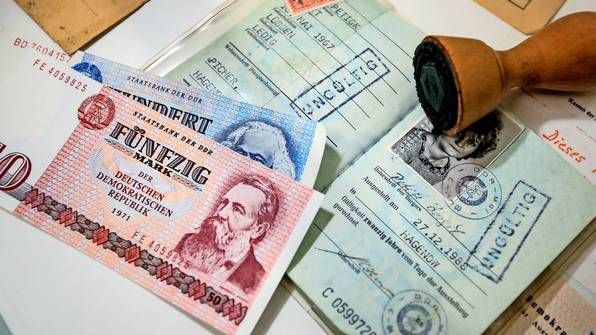
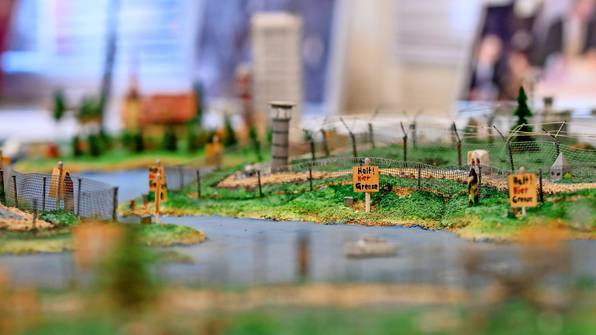
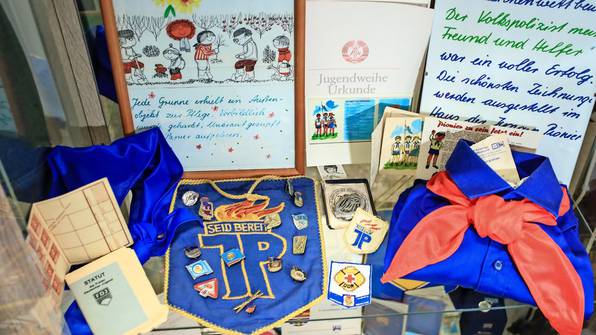
Im ehemaligen Zollabfertigungsgebäude dokumentiert das 2004 von Privatleuten initiierte Museum die Teilung Deutschlands. Die Grenzdokumentationsstätte versteht sich als lebendiger Ort des Lernens und Stätte zur historisch-politischen Bildung. Die Sammlung und vielfältige Dokumentationen zeigen die Grenzsituation hier vor Ort bis zur Grenzöffnung 1989. Ich vertiefe mich in die vielen Fotos, die z.B. die damaligen Grenzanlagen zeigen. Mich bewegen jedoch vor allem zahlreiche Alltagsgegenstände, die sich hier entdecken lassen. Spielsachen, Pässe, Schulhefte, Auszeichnungen, Orden. Hier geht es natürlich auch um die große Politik, mehr aber wird deutlich, was es bedeutet hat, an dieser menschenverachtenden Grenze tagtäglich gelebt und gearbeitet zu haben. Das hier gezeigte Modell veranschaulicht den Aufbau der damaligen Anlagen an der Grenze.
360°-Modell im Maßstab 1:87. Erstellt von Schülerinnen der Gemeinschaftsschule Niebüll. (Galerie gesponsert durch die Agentur cp360pano.com)
Schlutup was a dead end. Beyond the Schlutup border station were two more houses, and then officially the territory of the GDR began. White posts with red tops – nicknamed "matchsticks" – marked the inner-German border. There was no way to go any further east. Until November 9, 1989. Everyone remembers where they were on that happiest day for our country. Or the moment they learned what the night had brought. Naturally, a significant part of the exhibition is dedicated to the opening of the border. In the days and weeks that followed, the streets of Schlutup were jammed from morning till night. Hugs, spontaneous invitations, queues at the distribution points for welcome money, Trabants. Joyful moments. This weekend marks the 77th anniversary of the end of World War II. Everything is connected. In the current political climate, this has become very clear to me once again.
virtual visit

Fried herring with a view
Nach dieser Reise in die deutsch-deutsche Vergangenheit ist definitiv Zeit für eine Pause. Bitte Platz nehmen im Garten des Restaurants des Seglervereins Schlutup am Mühlenweg 4 mit Blick auf die Schlutuper Wiek, auf blaues Wasser und Segelboote. Oder im Gastraum, der genau so aussieht wie es sein sollte. Maritime Details, karierte Tischdecken. Ein bodenständig norddeutsches Ambiente. Ob Schollenfilet oder Neptunteller: der Fisch stammt größtenteils direkt aus der Trave und der Ostsee. So lässt es sich aushalten an einem Wochenende im Mai. Bis bald zu den nächsten ZWISCHENZEILEN. Da melde ich mich wieder mit einem Gastronomietipp aus der Lübecker Altstadt.