
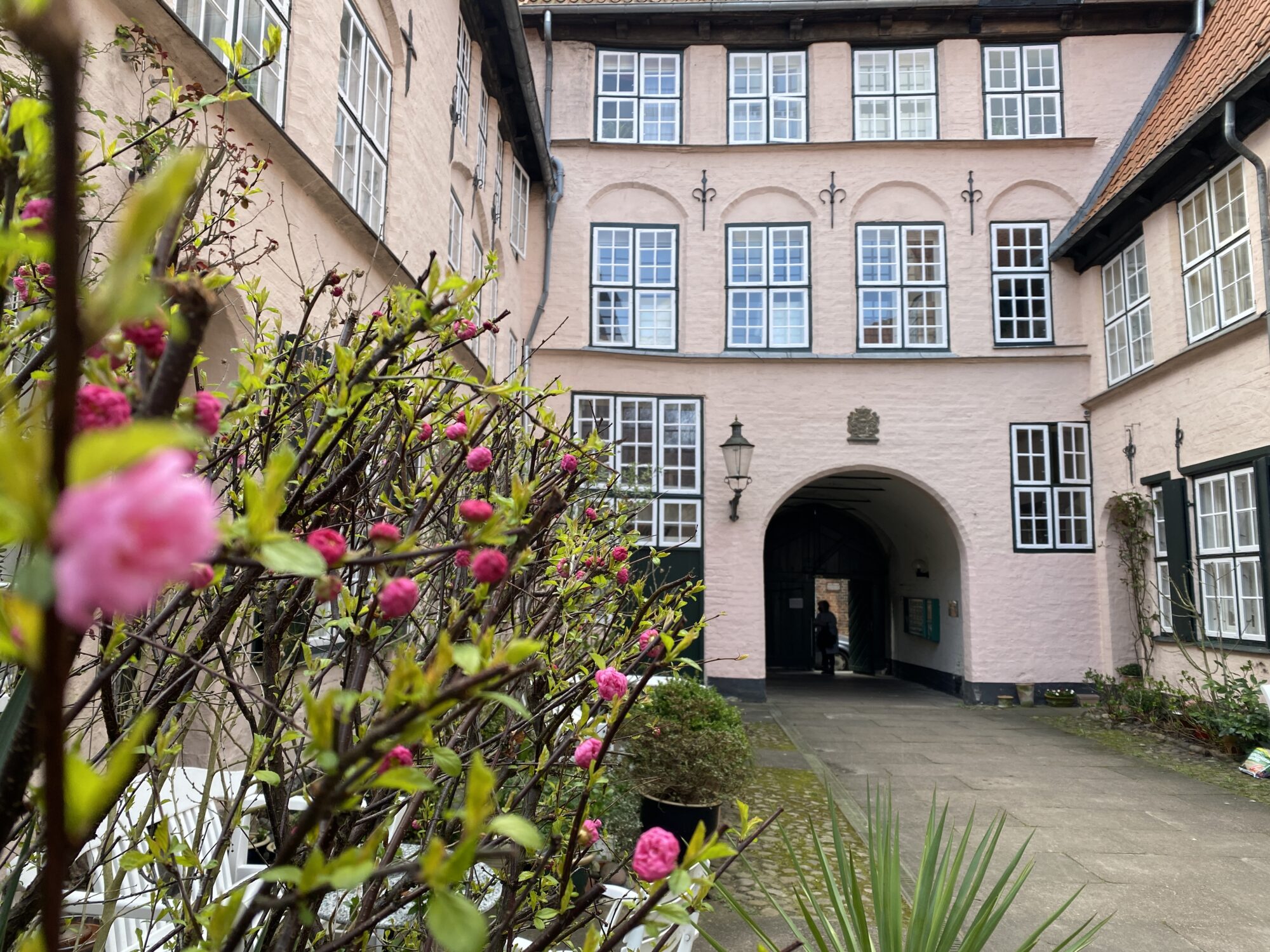
Today I recommend a visit to Glockengießerstraße 25-29, to a somewhat hidden but very popular place in the old town – the Füchtingshof, Lübeck's largest foundation, established in 1639, which is a convincing example of the social conscience of Lübeck merchants in earlier times.
Whenever I pass by, and the heavy entrance gate isn't closed for the residents' midday rest, I try to slip in for a moment and take in the splendor of the complex. I find the courtyard to be a unique oasis of tranquility. Sometimes I strike up a conversation with one of the ladies who lives there, enjoying a cup of coffee in the sunshine in front of her door.
The merchant Johann Füchting
In 1588, Johann Füchting, born in 1571 in Rittberg, Westphalia, came to Lübeck to live with his uncle, Hermann Haselkampf. There he completed a seven-year apprenticeship as a merchant. He then opened businesses, first on Gotland and then in Lübeck, which proved successful: Johann Füchting acquired two houses on Breite Straße and purchased a large garden outside the Burgtor (city gate). This man seems to have had a keen sense for good business and the courage to take risks. While troops were fighting in the Thirty Years' War across much of the Holy Roman Empire, Füchting invested considerable funds in the construction of more than 60 new ships.
A perpetually active man, whose work as a merchant apparently did not fulfill him. As a member of the Scania traders, he soon rose to become their elder. Füchting was elected to the city council in 1628, served as a churchwarden at St. Mary's, and was a member of the boards of various social institutions. Füchting also found happiness in his personal life in 1604: he was married to his wife Margarete for 31 years. However, the marriage remained childless.

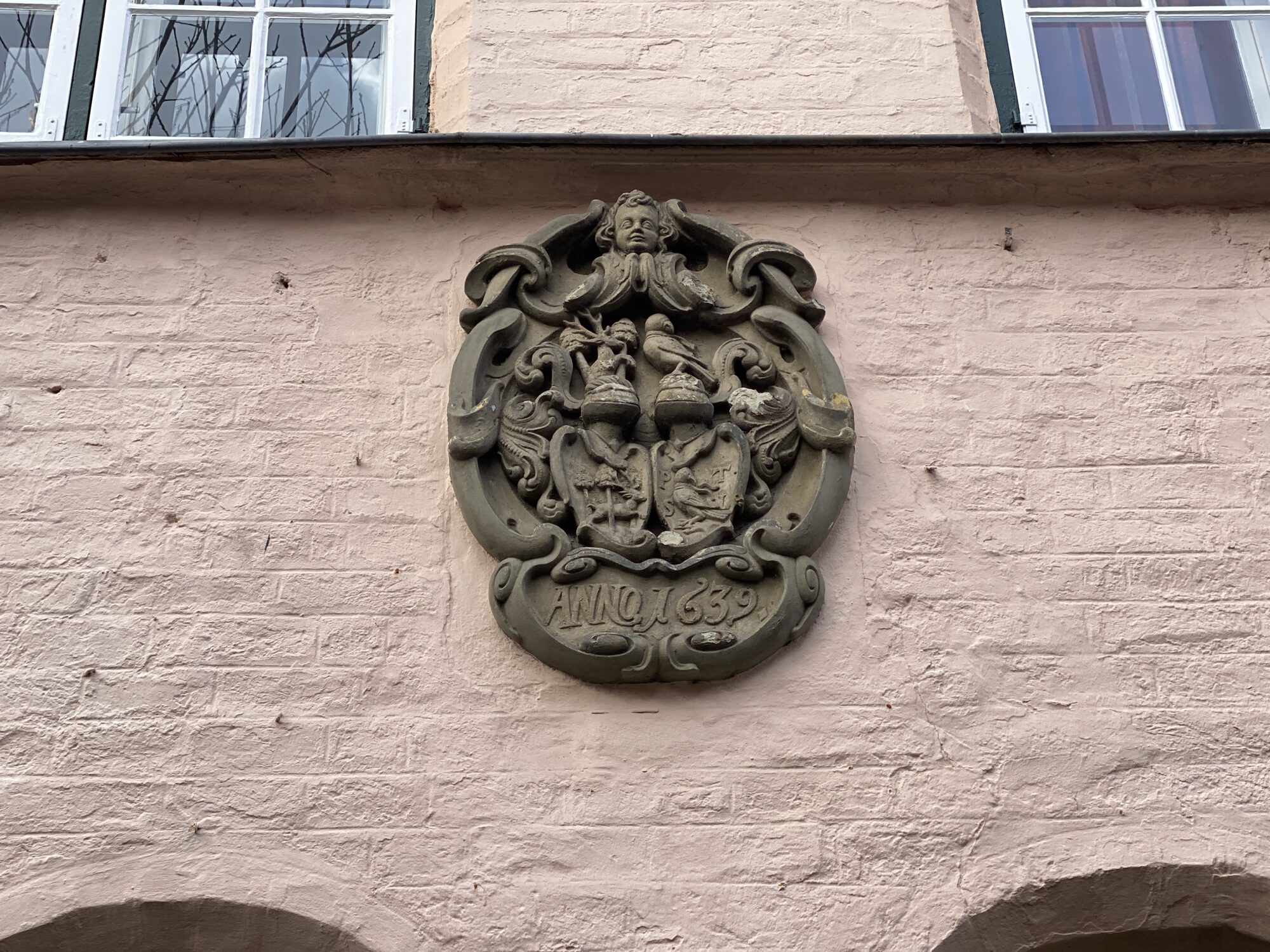
The Füchting Testament
Margarethe died in 1636 and Johann Füchting drew up a will in which he acknowledged that "the gracious God had richly blessed him with temporal goods in his station and profession" .
Füchting provided bequests and gifts worth more than 80,000 marks to the poor and sick, the elderly and orphans, the plague and smallpox hospital, the "senseless girls" in front of the mill gate, and all the maids in Breite Straße who had faithfully served their employers for more than six years.
Johann Füchting bequeathed the interest from 500 marks to St. Mary's Church "on the condition that the gentlemen in charge might grant permission so that, after my death, my epitaph, as stipulated in my will, might be erected near my burial on the pillar most suitable for it." The epitaph located in St. Mary's is still preserved today.
The remaining part of his estate should be divided equally between his heirs and a foundation: for the glory of God and the benefit and well-being of the poor, as well as for my own and my dear wife's perpetual memory, and also as an example and example to other charitable Christians blessed by God."
The monastery courtyard
Johann Füchting died in 1637 at the age of 66. City architect Andreas Jeger acquired the property of merchant Christoffer Kuß, along with a house on Glockengießerstraße. With the purchase of further adjacent houses, and within just two years, the foundation stone for the Füchtingshof was laid. Since then, numerous alterations have naturally taken place, with a comprehensive renovation carried out between 1975 and 1977.
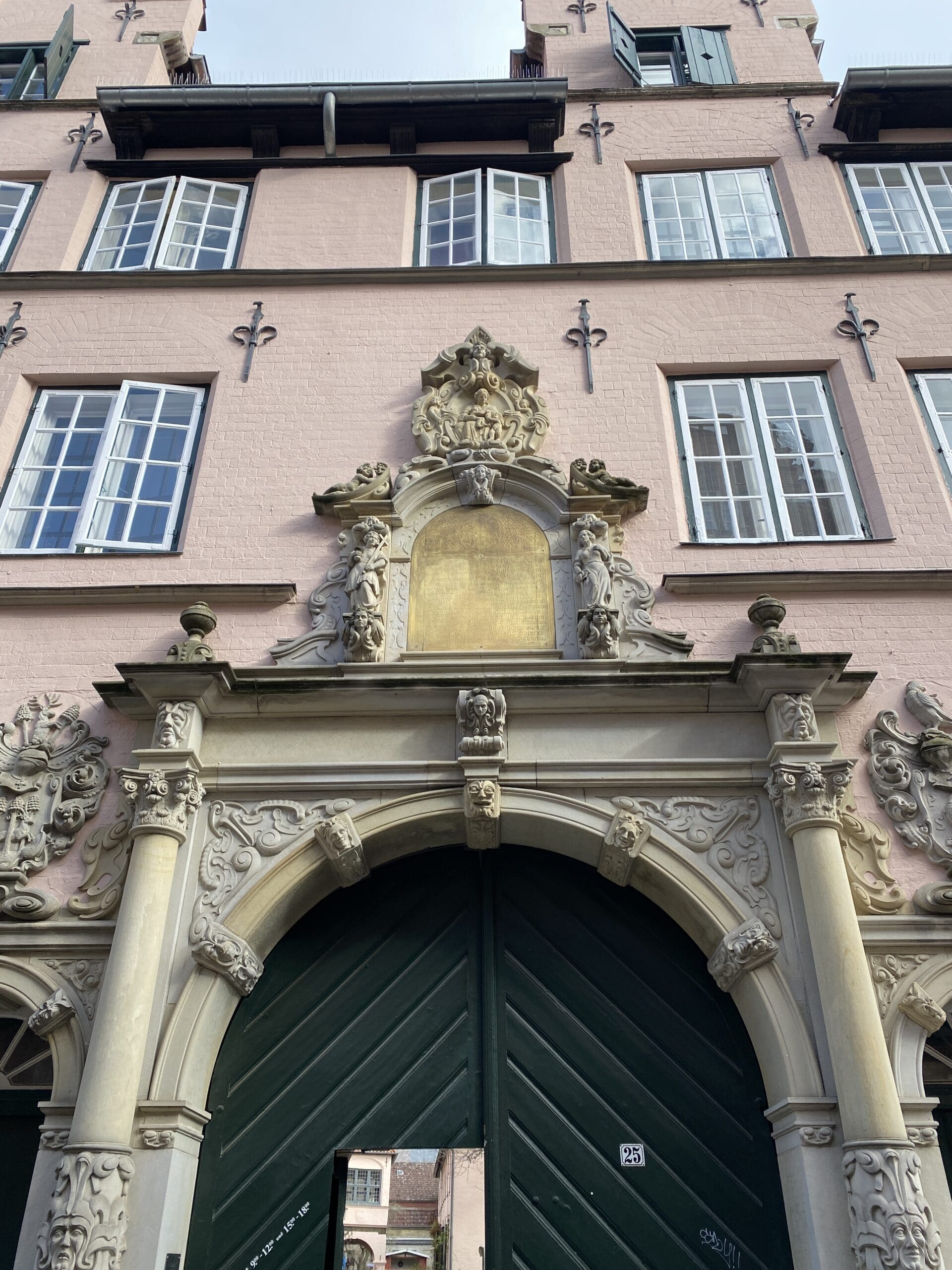
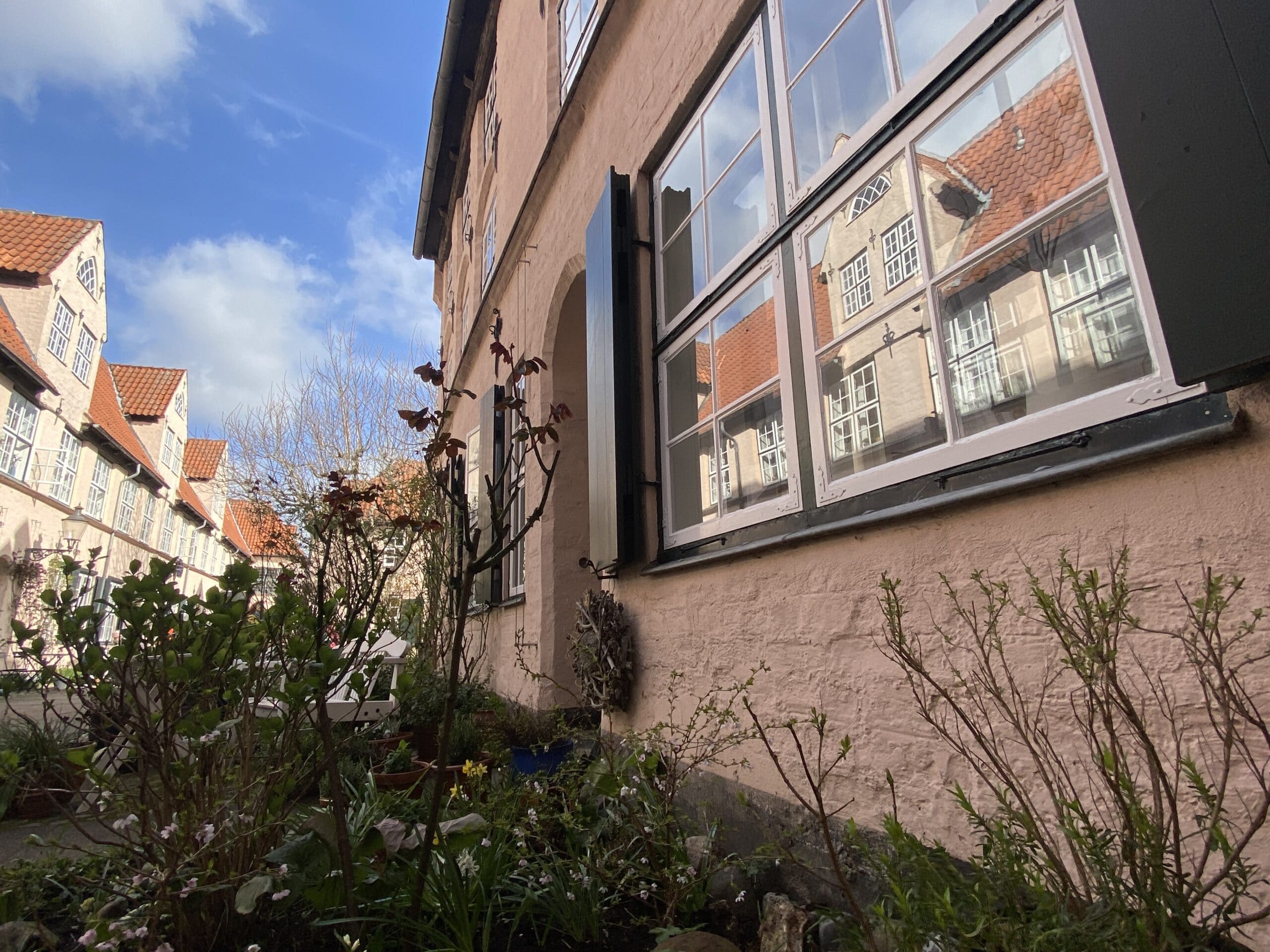
The imposing, whitewashed brick facade in early Baroque style remains impressive to this day, featuring a richly decorated sandstone portal with the allegory of "Caritas" and the founder's coat of arms. In the generously sized courtyard, a long, two-story wing with picturesque dormer windows stands to the left. To the right, in the Füchtingshof courtyard, are three separate buildings. A white bench stands before each entrance. Flowerbeds and rose bushes beautify the light-colored buildings in summer, behind which lie comfortable little apartments, which, incidentally, are no longer rent-free.
The headmaster's office
In the left wing, the so-called "Headman's Room" has been located in a projection since 1653. The floor is made of yellow and green glazed tiles. The room features a magnificently carved door, precious paneling, and a tall, decorative stove dating from 1653. The furnishings are over 350 years old. Here lived—as you might have guessed—the head of the convent. On Open Monument Day in some years, you have the opportunity to see it for yourself at the Füchtingshof.
"Since all the widows residing on this estate enjoy its benefits due to their poverty, it is their duty, on the other hand, to dress honorably and decently according to their circumstances, to refrain from all foolish finery and clothing decoration, to live quietly, chastely and honorably, and not to neglect public worship when in good health."
Excerpt from the court regulations of 1792
And you decide everything!
Founders like Johann Füchting were allowed to determine who, how many, and of what social standing were permitted to live in their institution. For example, while in Augsburg one had to be a citizen of the city, poor, and Catholic to be admitted to the Fuggerei, Johann Füchting stipulated that only needy widows of merchants and a maximum of four widows of ship captains should be admitted. Young women, on the other hand, were not to be admitted, "because, according to the testator's wishes, it should be a women's residence and not a maidens' residence, so that the wishes of the deceased are honored." Residents of the foundations were allowed to live rent-free, but a "burial fee" had to be deposited.
At Füchtingshof and other foundations, the residents received pocket money, known as "quarterly money." This money—10 Lübeck marks—was distributed on Easter Eve, Midsummer's Eve, Michaelmas Eve, and Christmas Eve. The house rules were usually read to the ladies as well. Knowing this, it's doubly pleasant to find a secluded spot at Füchtingshof and let the tranquility of the place wash over you. Perhaps one of the residents will invite you in for a cup of coffee.