
Bestimmt ist es dir schon passiert, dass du eine Reise unternimmst und du in deiner Reiseapotheke dann doch nicht genau das richtige Präparat dabeihast. Warum ich danach frage? Eine Apotheke findet sich schließlich fast überall. Das stimmt. Aber keine so einzigartige wie die Löwen-Apotheke mit ihren sehenswerten Räumlichkeiten in einem historischen Gebäude aus dem Jahr 1230. Schau mit mir hinter die backsteinerne Fassade, entdecke die Wunderkammer und die Löwen-Manufactur und triff Marcus Niendorf, den Inhaber des Patrizierhauses, der hier gemeinsam mit seiner Frau mit Kreativität und Ideenreichtum einen wahren Schatz in der Lübecker Altstadt geschaffen hat.
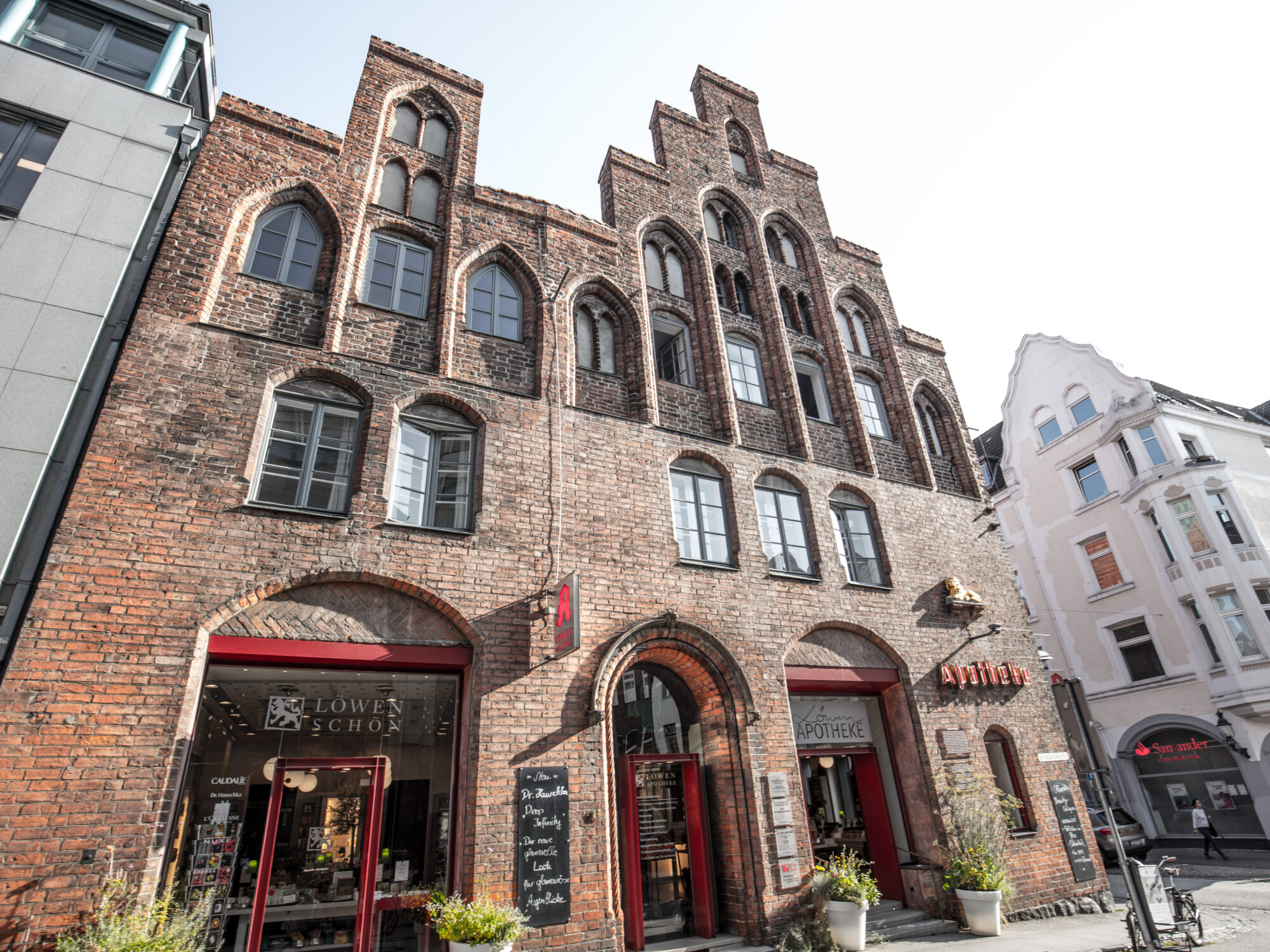
One of the oldest patrician houses in Germany
Beinahe jede Stadtführung bezieht das prächtige Gebäude an der Ecke Königstraße/Dr. Julius-Leber-Straße ein. Hat es doch eine Rückfront, die in romanischen Bauformen restauriert wurde. 1375 residierte hier die Gemahlin des damaligen deutschen Kaisers Karl IV. Der Herrscher war im gegenüberliegenden Gebäude untergebracht. Eine Tafel am Erker des Hauses erinnert an diesen besonderen Tag, der in der Ratschronik sehr detailreich beschrieben ist. Demnach sei die Herberge ihrer Majestät Kaiserin Elisabeth „auf das prächtigste zugerichtet“ gewesen und „es war ein köstlich bedeckter Gang von dem einen Hause zum andern quer über die Gasse aus dem Fenster gemacht, damit beide zu einander gehen könnten, wann sie wollten.“
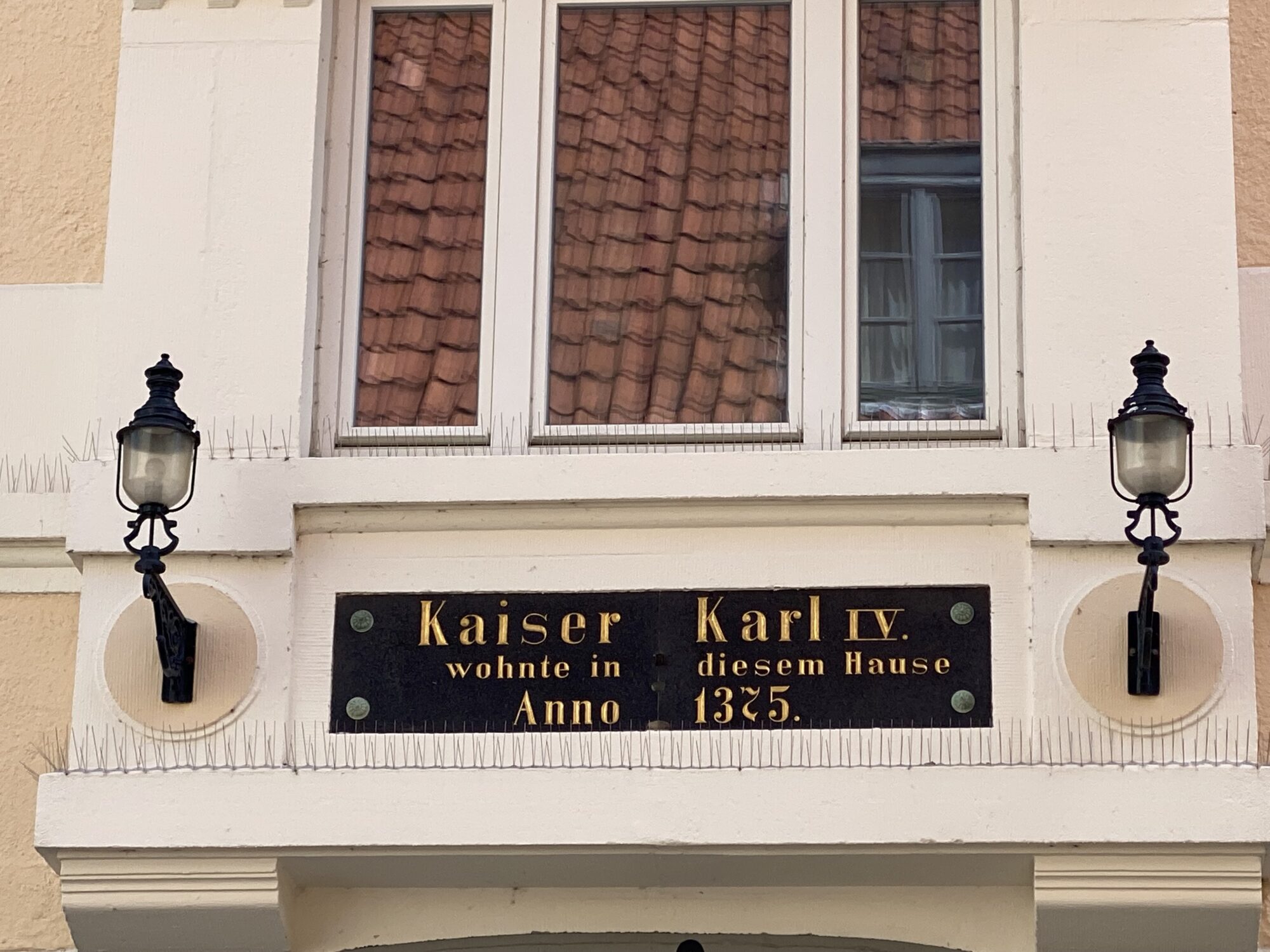
The tour guides here like to tell the story that the two monarchs used to quarrel during the day, and the people of Lübeck waited under the balcony to see who would make the first move toward reconciliation. It is said that the emperor initially had to knock several times on his wife's locked window before she granted him entry. Later, however, the two high-ranking figures appeared together on the bridge and even exchanged a kiss. A wise decision. Although the discord between the imperial couple is not documented, Niendorf's Löwenstark (Lion Strength), one of the essential oils developed by Marcus Niendorf in his Löwen-Manufactur (Lion Manufactory), would certainly have helped. It contributes to inner peace and serenity.
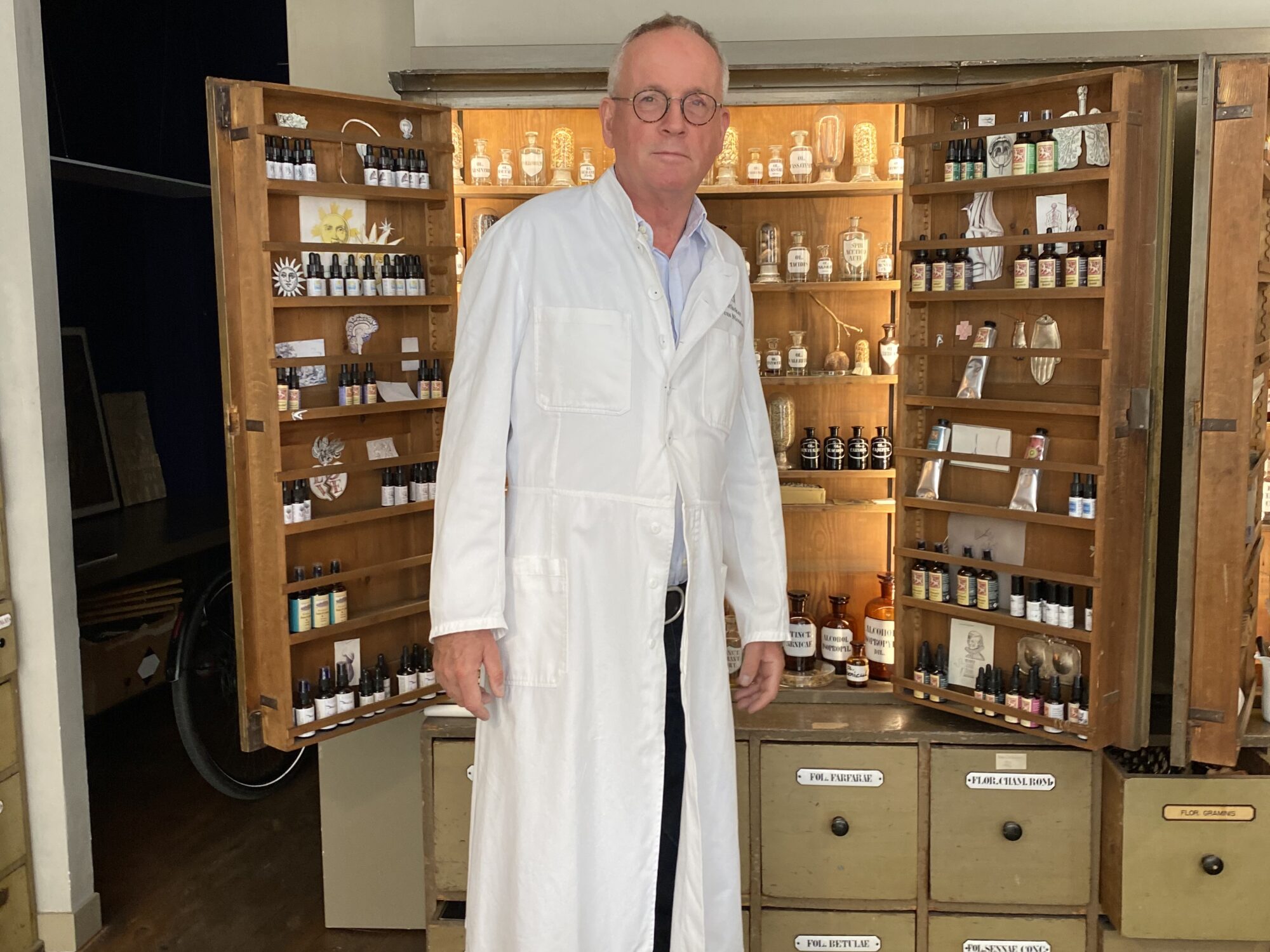
Adolf Sager eröffnete in diesem Haus am 15. April 1812 die Löwen-Apotheke. Seit 125 Jahren ist die Apotheke im Besitz der Familie von Marcus Niendorf. Der studierte Pharmazeut führt sie seit 30 Jahren mit viel Geschick in vierter Generation. Im Laufe der Jahre erwuchs in ihm der Wunsch, die Geschichte des Hauses und der Apotheke, den Heilberuf des Apothekers und dessen jahrhundertealtes Wissen sichtbar zu machen.
During a visit to Florence, he was inspired by the "Officina di Santa Maria Novella," whose origins date back to 1221, to focus on a new area and develop his own recipes. This idea felt fantastic. However, it took several more years before he had the courage to make his work with healing ointments more than just a side project and to dedicate all his energy to developing finely balanced recipes and thus to his Löwen Manufactory.
And as so often happens in life, one thing led to another. The large sales area was then remodeled in the style of the court and monastery pharmacies of bygone eras. These were often lavishly decorated, with high stucco ceilings and adorned with paintings. For his high-quality herbal products, Marcus Niendorf created an ambiance with a warm yet sophisticated atmosphere. It always gives me pleasure to linger at the sales tables under the vaulted ceiling, decorated with golden stars, enjoying the soft background music and a leisurely pace.
The Lion Manufactory
The first recipe, for healing ointment number 22, came from his great-grandfather Adolf Brandt. To this day, Marcus Niendorf remembers the handsome tin and the pasty cream with its wonderful vanilla scent.
The products from Löwen-Manufactur offer solutions for a wide range of ailments, from herpes and heartache to coughs. People with exam anxiety can find an essential oil that is both concentration-enhancing and relaxing, just as migraine sufferers can find a proven oil made from marjoram, lemon balm, and peppermint. A whole range of products caters to female customers and their well-being in different phases of life.
LISTEN
Die LÜBECK ZWISCHENTÖNE haben im Juli die Löwen-Manufactur besucht und den neuen Gin probiert! Hör mal rein:
You are listening to a snack from the complete edition of Lübeck Zwischentöne.
Die gesamte Folge des Podcasts hörst du auf www.luebeck-zwischenzeilen.de/podcast.

The effects of the plant-based ingredients are frequently proven by scientific studies. These studies confirm the extensive expertise that Marcus Niendorf has acquired over the past decades and reflect the innovative approach of this pharmacist. He derives great pleasure from developing new formulations, finding a suitable name, and designing high-quality packaging.
Es heißt ja immer, dass hinter jedem erfolgreichen Mann eine starke Frau steht. In Marcus Niendorfs Fall steht die starke Frau direkt neben ihm: Dietlind Wolf ist mehr ist nur Marcus Niendorfs Ehefrau – sie ist seine Muse und als diplomierte Designerin selbst eine erfolgreiche Frau, die sich u.a. als Stylistin, Porzellandesignerin und Fotografin auch international einen Namen gemacht hat. Ich folge ihr schon lange auf Instagram und sollte ihrer Arbeit gelegentlich einen eigenen Artikel widmen. Dietlind Wolf setzt die Produkte der Löwen-Manufactur für Printprodukte, den Online Shop und die Social Media Auftritte bei Facebook und Instagram mit ihrer ganz eigenen Handschrift in Szene. Ihre Ideen sind selbstverständlich auch in die Gestaltung der Räumlichkeiten eingeflossen.
Poets and thinkers on the ceiling
Marcus Niendorf sees himself as an enthusiastic and inquisitive layman—as he puts it—who has immersed himself in topics such as the history of pharmacy, art, botany, architecture, and design with the knowledgeable and expert eye of a pharmacist and a great deal of enthusiasm. Therefore, it is always a pleasure to meet him in person in the shop. He holds countless stories of events and people connected to the Löwen Apotheke (Lion Pharmacy): ancestors and previous owners, but also Thomas and Heinrich Mann, Erich Mühsam, who was one of the signatories of a petition to save the building in 1901, and Friedlieb Ferdinand Runge, the first pharmacy apprentice at the Löwen Apotheke and later discoverer of caffeine and quinine. Runge, in turn, was received in a private audience by Johann Wolfgang von Goethe.
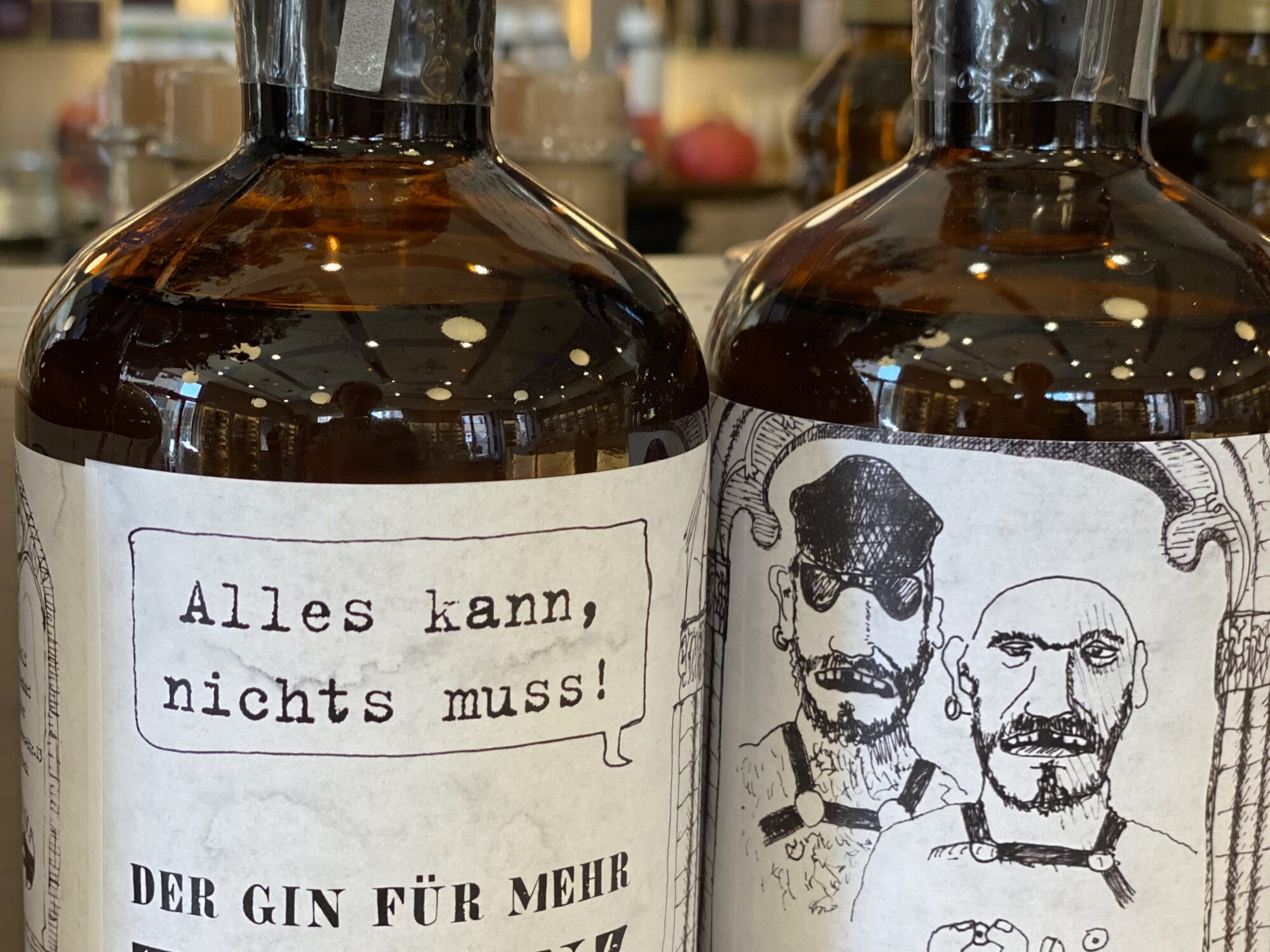
Their portraits are to adorn the ceiling of the adjoining room – the so-called "cabinet of curiosities" – in the near future as a comic strip. A few drawings created by Marcus Niendorf himself are already hanging there as a trial.
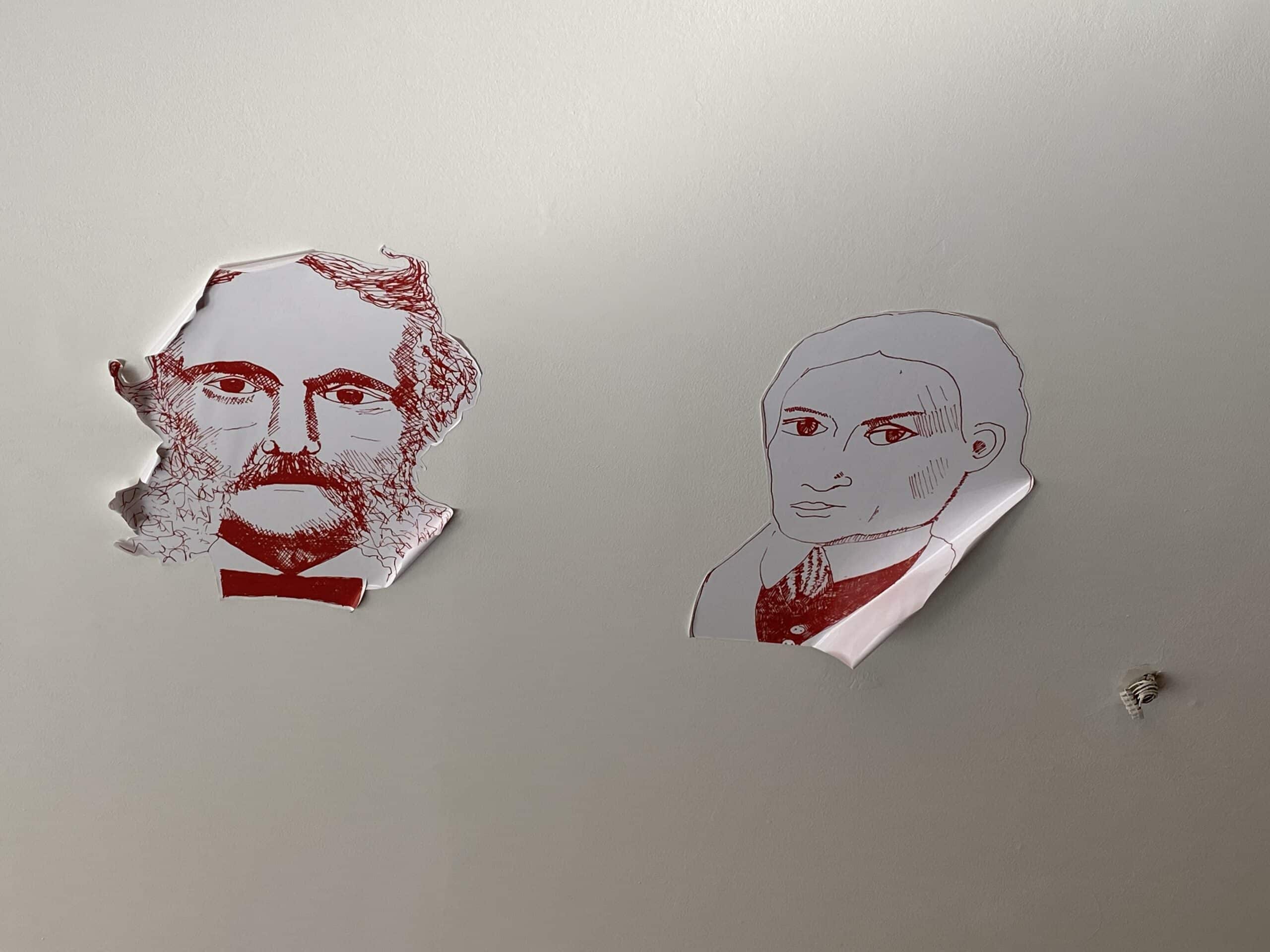
The Chamber of Curiosities
This room, located next to the sales area, is a kind of museum and a true treasure. "Cabinet of Curiosities"—that's what humanistically educated Renaissance princes had set up for themselves in the 16th century. Here they displayed their valuable art and natural history collections. Many pharmacies of that time looked similar. The sales rooms invited their awestruck customers to marvel at these wonders, including narwhal tusks, ostrich eggs, and coral. Even a crocodile was once part of a high-class pharmacy's collection.
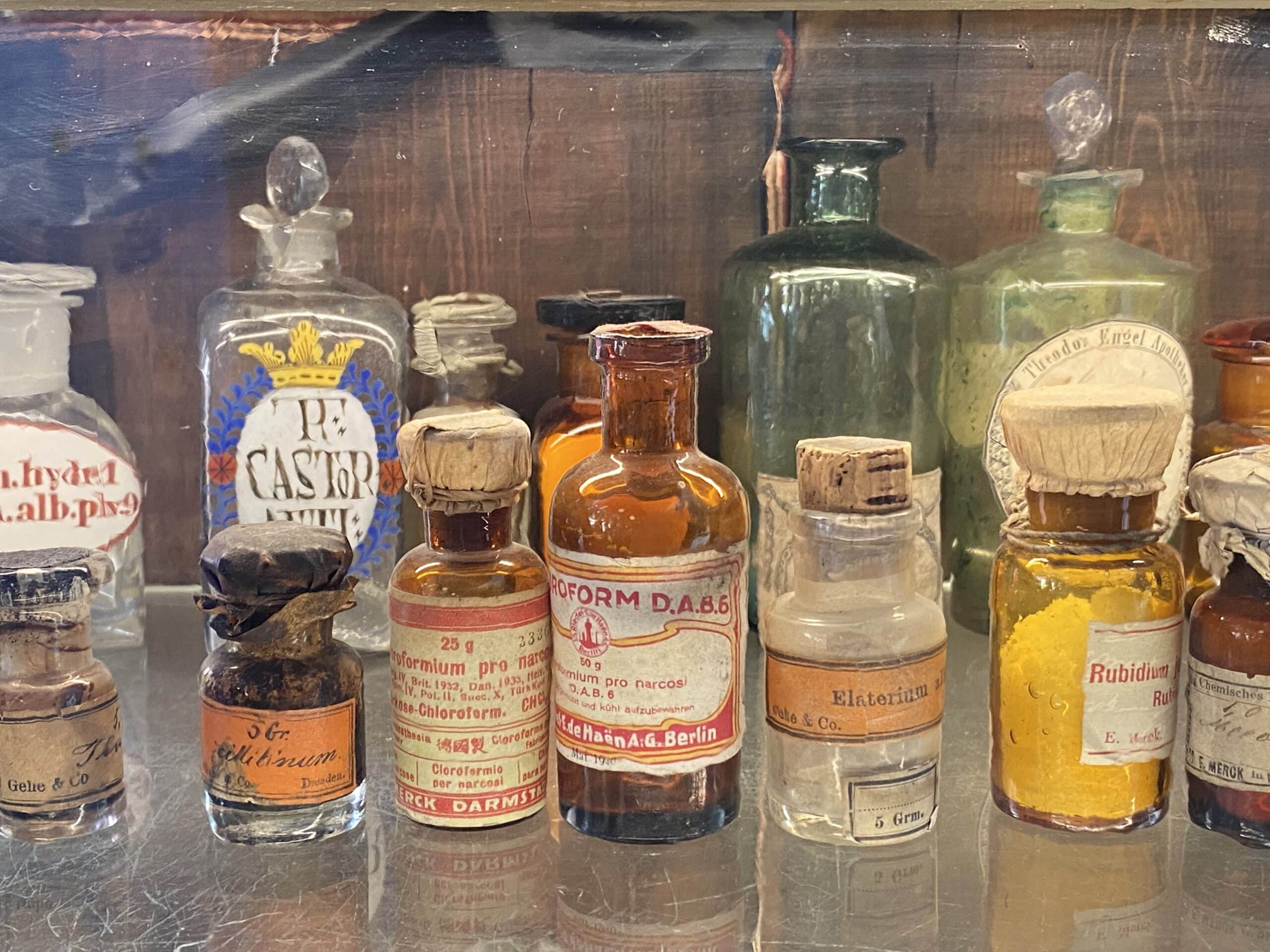
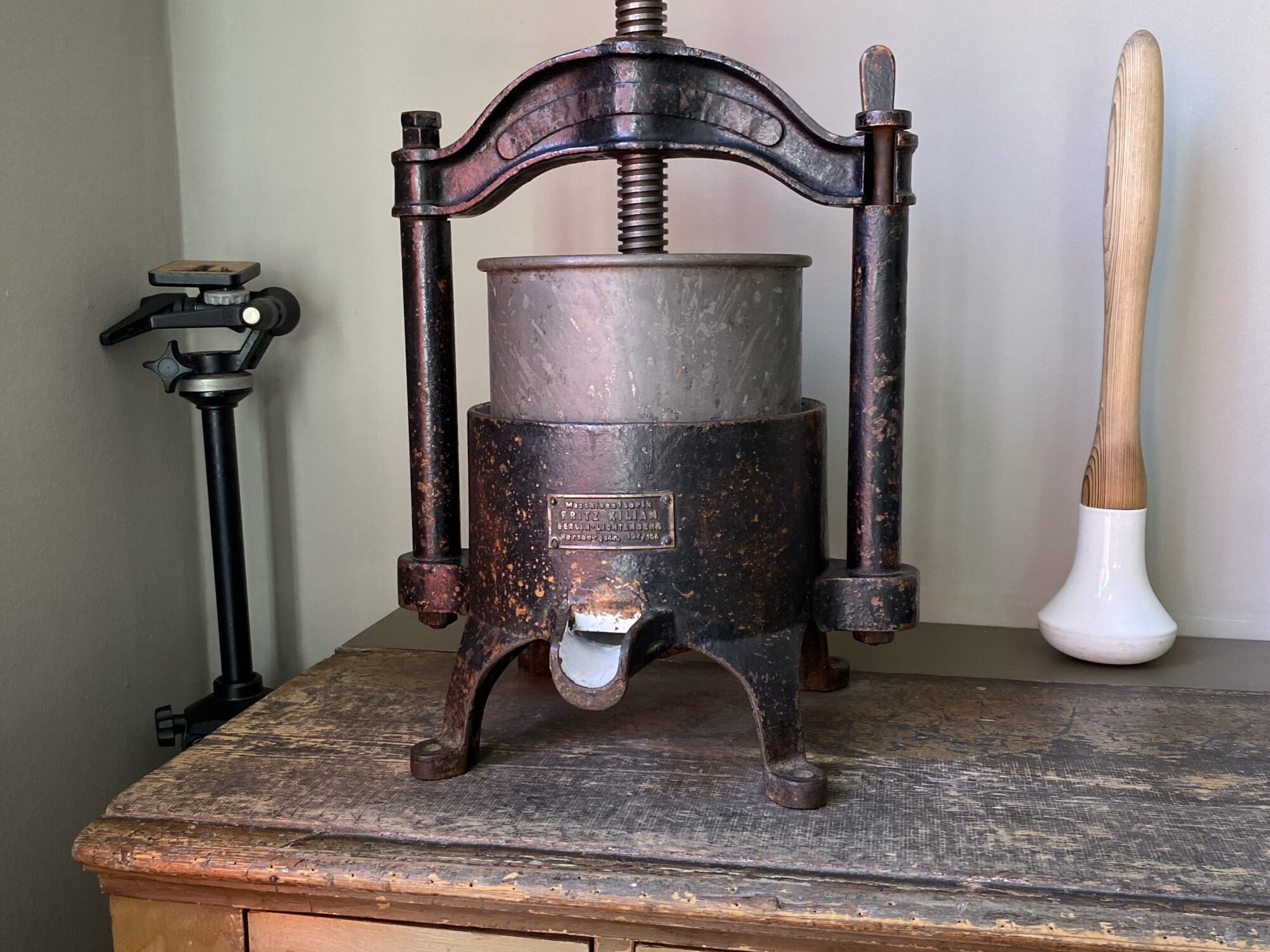
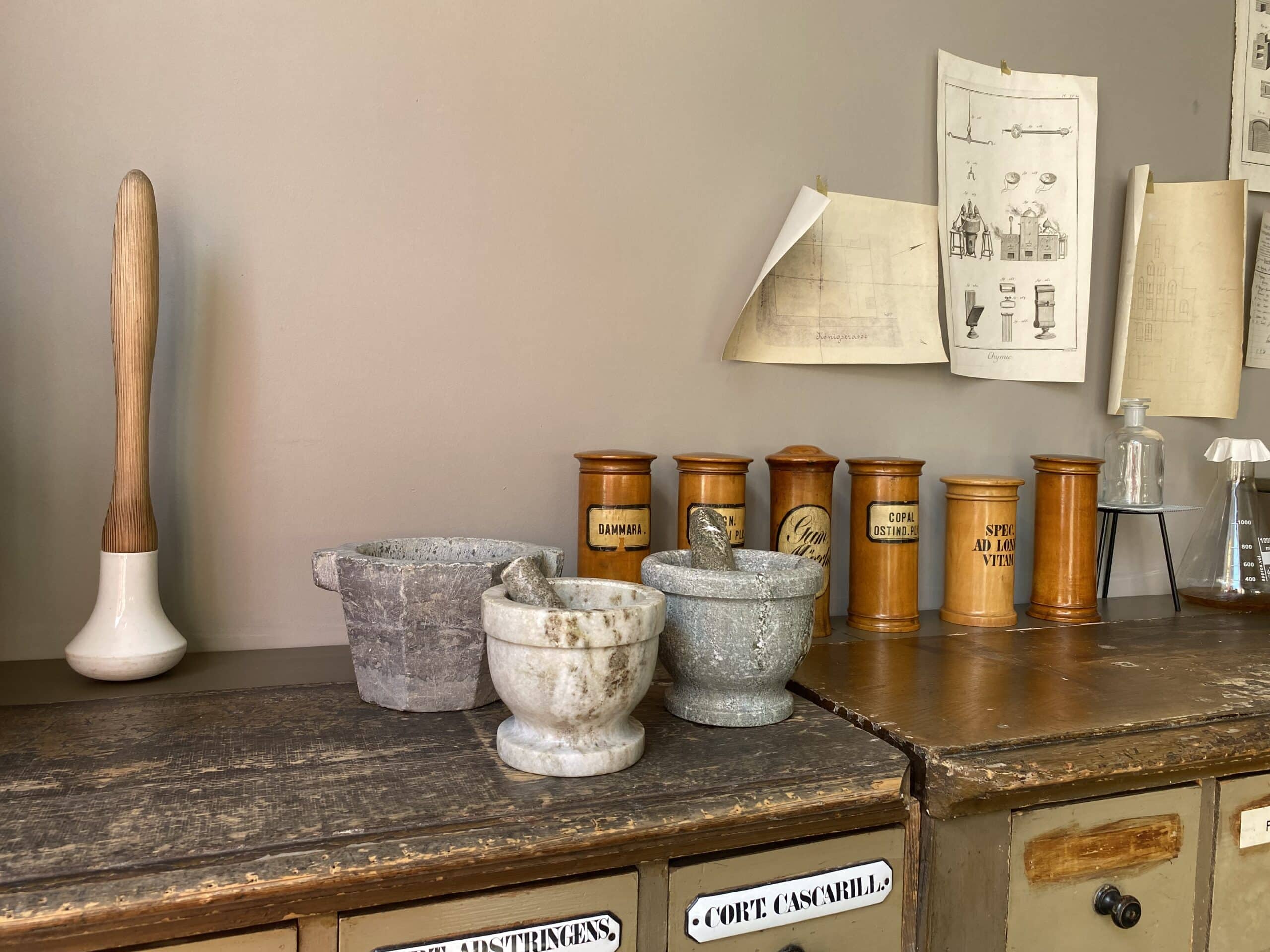
A crocodile also hangs on the wall in Niendorf's cabinet of curiosities. The furnishings come from a pharmacy in Hamburg, which Marcus Niendorf discovered through family connections. Dating from around 1850, it possesses the unique patina of a pharmacy where work was carried out daily. This more than 170-year-old storeroom had around 300 drawers. In the cabinet of curiosities at the Löwen Pharmacy, you can admire pestles and mortars, fragments of old tree trunks, perfume bottles, faience, and glass retorts. Feel free to browse. New treasures are constantly being added, as this multi-talented man is not one for stagnation.
[Transparency notice] This article was financially supported by Löwen-Manufactur GmbH & Co. KG.